



An epochal shift
The turbulent AI era is here. The choices we make now are critical.
We need a plan to ensure that the good outweighs the bad.


During my entire life I’ve only had two jobs. In the first one, I played a role in developing software to empower people through my work at Microsoft.
In my second one, which I started full time in 2008, I am giving back the wealth I made at Microsoft with the goal of making the world a healthier, better educated, and more equitable place. This is the job I will have for the rest of my life.
Both of these experiences inform my perspective on artificial intelligence. When I first learned about computers at age 13 I was fascinated by the idea of making them more intelligent and able to perform things that, at the time, only humans could do. Although the term “AI” was used from around the time I was born, the technology has only made significant progress in the last decade. It is now incredibly capable and it is continuing to improve at a mind-blowing rate. AI for the first time can replace and even exceed human cognition.
In terms of equity, AI will either be the greatest equalizer ever invented, or the worst source of injustice. The challenge is monumental. Even under the best circumstances, the transition to this new AI era will be one of the most turbulent times in human history. How will we use this technology to make the world a fairer place and keep it from widening the divide between rich and poor? How will we protect the people who are most vulnerable to the harms caused by artificial intelligence, including those who lose their livelihoods and the sense that they are in control of their future?
I believe that answering these questions and acting on the answers should be the world’s top priority. If the world takes the right steps AI will be a force for good and leave everyone better off.
Unfortunately, right now we are not preparing for it. I don’t see evidence that leaders, experts, and communities are confronting the challenges adequately. There is no plan to ease the entry into the AI era.
Part of the reason for this is that many commentators underestimate the extent of the impact AI will have. I think there are a few reasons why.
One is the fact that AI models still make mistakes. It is hard to envision any of them replacing human cognition when, not long ago, they couldn’t solve a simple Sudoku puzzle or figure out how many R’s are in the word strawberry.
But the reliability problem is being fixed quickly, as researchers create models that can check their own work and improve themselves. Soon they will be substantially better than humans at many tasks.
Another reason people underestimate AI is that analogies to the effects of past innovations are misleading. We have no experience with a technology that can be adopted quickly or that can think and move like a human. When the PC came along, it took twenty years to significantly change how we worked because the software had to be developed, the price had to come down, and people had to learn how to use the tools and incorporate them into their business processes. AI, on the other hand, runs on the devices we already have, and it uses natural language. We don’t have to adapt to it because it can adapt to us. It can watch the same training video that is used to train human workers and learn from existing data.
I want to acknowledge a potential bias. I have benefited enormously from the technology industry. Although I have diversified my portfolio quite a bit, I still have financial ties to it. I am working with Microsoft and other AI companies in my role as chairman of the Gates Foundation to try and ensure AI is deployed in ways that will truly benefit people around the world.
However, my views on AI are not motivated by the potential to make money for myself. Any profits generated by my investments, including those related to technology, will go to the Gates Foundation to tackle global inequity. Of course, readers will have to decide for themselves whether this clouds my view.
This time really is different.
For as long as I can remember, I’ve wished innovation could happen faster. With AI, my feelings are more complicated.
I wish the world could get the benefits rapidly and delay the problems it will cause as long as possible, but the benefits and problems are arriving at the same time. I believe we need time to prepare for the period of social, political, and economic upheaval we are about to enter. The people who need the most time are the ones who have the least—the accounting worker who’s replaced by a bot or the $20-an-hour worker who loses their job to a $10-an-hour robot.
Many observers say that this technology transition will be like previous ones. They give the example of how jobs in the United States shifted from agriculture to office work. However, that proceeded over several generations and created new jobs where human cognition was required. In this case, the technology can substitute for human cognition.
Because it can see, listen, speak, and reason and will eventually do physical work just as smoothly as any human, it will not just affect one sector. AI will take on work in law, customer service, medicine, software, and manufacturing. It will hit these industries rapidly, over the course of a decade rather than a few generations. There will be some new jobs, but without the right policies there will be far fewer than exist today.
If someone had a credible plan for slowing down AI advances globally, I would likely support it. However, I don’t think that’s going to happen. The geopolitical and economic incentives are pushing too hard to go full speed ahead.
To make sure we maximize the positive effects of this unprecedented technology and minimize the bad so we are better off overall, we need to understand both the benefits and the risks. I’ll start with the risks.
The transition to AI comes with three big risks.
I plan to write about each of these in more detail in the future, so I’ll touch briefly on them for now.
Many jobs will disappear forever.
In 1933, during the Great Depression, unemployment in the United States was roughly 25 percent. It remained in double digits for much of the following decade. It ultimately recovered as demand, investment, and growth returned.
AI may not reach this level, but its impact will not go away with an economic cycle. The jobs at most risk are entry- and mid-level, and the new jobs being created will mostly require skills that take many years to learn.
White-collar jobs are already being hit modestly. After the widespread adoption of generative AI, employment fell significantly among young workers in jobs that are especially vulnerable to replacement, but not among their older colleagues.
I think this trend will continue, but it will not be confined to a handful of industries or occupations. Jobs in sales and customer support (online and over the phone), software engineering, and paralegal work may be among the first affected, but the disruption will reach much further as AI takes on tasks that today still require trained workers: things like assessing loan applications, doing data analysis, and even triaging patients. A few areas like software engineering will generate new demand as the costs go down, so the net job loss in those areas will be less than in others as long as some tasks, such as design, are better done by humans.
Blue-collar jobs will be affected as well. Although robots are not as far along as AI, eventually their cost will be dramatically lower too. Many Americans I talk to don’t realize how fast dexterous robots are advancing because much of the advanced work is being done in other countries, primarily China. Or they may be confused by those videos of robots dancing badly that have been going viral lately. I think “smart” robots will begin to compete with people on some physical tasks—in the construction and hospitality industries, for example—by the end of the decade.
Robots and AI combined can create a vicious cycle. After one company adopts them and uses the savings to lower its prices, its competitors will feel immense pressure to do the same. If existing companies don’t adopt them, then start-ups will. Many people will shift to other jobs, but the turmoil of losing work, getting retrained, and finding other work will be significant. Market forces will make adoption go faster and faster and, unless we intervene, there will be fewer good jobs available and the benefits will accrue to a small group.
I’m especially worried about young people, who will enter a workforce with fewer entry-level openings. They understand the challenge because they are the most active users of AI and see both the capabilities and the rate of improvement. It’s no wonder that so many of them feel negatively about AI.
The biggest shift for workers will happen when AI provides nearly error-free work. At that point, it will be able to function on its own without a human checking in on it, and companies will have every economic incentive to let it.
This will lead to a fundamental change in how we think about work, income, and economic security. How will an economy that’s been built around employment operate if fewer people are working, or if many people are working fewer hours?
In a capitalist society, employment is the way most people get the money they need to pay for the basics of life as well as being a key source of dignity and social connection.
When a community has high unemployment, the ripple effects can be pervasive. Research suggests that in some parts of the United States, factory closures contribute to a rise in deaths from opioid overdoses. Now imagine similar pressures on both white-collar and blue-collar workers nationwide.
We have to think now about how to reduce job losses so that everyone can share in the prosperity that AI creates. Waiting until people are already displaced or underemployed will be too late. AI is a structural challenge to the way our economy is organized, and it requires thinking and action now.
AI will empower people (and perhaps AIs) to do more harm.
Long before AI entered the mainstream, there was information online about how to create weapons like bombs, bioweapons, even computer viruses. AI will make it much easier to not only get this information but act on it. Even criminals with very limited skills will be able to target victims at every scale: individuals, companies, and governments.
AI-enabled fraud, disinformation, deepfakes, and surveillance are the harms that many people will feel most keenly in their everyday lives.
AI capabilities are starting to be used for cyberattacks. The smartest cybersecurity experts I know are scared about the next few years, because the attackers are getting powerful new capabilities faster than the defenders can fix all the weaknesses. After all, the same AI model that can find a flaw in software so a company can fix it can also help a criminal exploit it. The resources needed to make an attack are going down significantly and we haven’t been able to separate those abilities from benign usage.
Think about the infrastructure that will be vulnerable: hospitals, financial institutions, water systems, power grids, systems for managing government benefits. When these institutions are attacked, it’s the patients, customers, and benefits recipients who stand to lose.
The same goes for bioterrorism. Although AI will lead to lifesaving advances in drugs and vaccines, it will also make it easier to design a deadly new disease. Again, the positive capabilities are hard to separate from the dangerous ones. This is a global problem.
The risks I’ve just mentioned are all about how AI will empower bad actors who have relatively little power now. The same tools will also concentrate power in places where it already exists. Autonomous weapons, for example, will make governments even more capable of using deadly force without a human being part of the decision. Monitoring and manipulating public opinion will be easier and cheaper, and more effective too.
Eventually, the power to use AI to harm people will not be limited to people or institutions. AI systems themselves already occasionally act in ways their designers didn’t intend. The technology is improving faster than anyone expected and in surprising ways, and as the models become more powerful, they could begin to act against our interests and we could lose control. I’ll have more to say about this in the future.
AI could stunt our kids’ development and replace human relationships.
When I was growing up in Seattle, I didn’t have that many friends aside from a few other boys who were like me. It took hard work and a lot of help from my mom to develop my social skills so I could relate to different kinds of people. I still draw on those lessons today at the age of 70.
I doubt I would have put in the same work if I had had an AI companion back then. They talk to you in ways you’re already comfortable with. They don’t push you outside your comfort zone. They are always available and never get mad at you. This gives them the potential to become highly addictive and to rob us of the lessons we learn from connecting with other people.
The body of evidence on this subject is still small and a bit mixed, but there are signs that we should be very concerned. For example, in one study of more than 1,100 people who use AI companions, researchers at Stanford and Carnegie Mellon found that those with smaller social networks were the most likely to turn to a chatbot for companionship. And the heavier and more emotionally personal that use became, the worse they felt.
Young people could be affected for their entire lives. In his book The Anxious Generation, Jonathan Haidt makes an observation about the effect of social media that is even more true for AI: “Like young trees exposed to wind, children who are routinely exposed to small risks grow up to become adults who can handle much larger risks without panicking. Conversely, children who are raised in a protected greenhouse sometimes become incapacitated by anxiety before they reach maturity.”
An AI companion designed to never upset you is a big, protected greenhouse.
We are only beginning to understand the dangers that the internet—especially social media—can pose to young people’s development. We’re seeing compulsive use, disrupted sleep, cyberbullying, and exposure to harmful content. AI could magnify many of these risks by making them more persuasive and difficult to escape, and we should not wait another generation to start taking them seriously. Countries including Australia, the United Kingdom, and Norway are adopting protections for children online. China has gone the furthest. Its rules restrict AI companion apps broadly, bar designs that foster emotional dependence, and ban virtual relatives and romantic partners for minors.
I’m also worried about AI’s impact on education. Ironically, the same tool that will allow people to learn more than ever could also lead to many people learning less. One preliminary survey suggested that heavier AI use was associated with less critical thinking. The effect was stronger for younger people.
This would be the worst possible time for humans to lose their critical thinking skills. In an era of deepfakes and misinformation that can be tailored to you individually, the ability to tell what is true from what is not becomes an essential life skill.
It’s unclear where to draw the line on these psychosocial problems. In some cases, AI may help people understand how to do better in their human relationships. It may be the only contact with the outside world for isolated elderly people and people with limited mobility, and it will be better than nothing. Wherever we end up drawing the line, it should be our decision, made intentionally.
The good things we do with AI could be very, very good.
It’s often said that we overestimate how much will change in the short term and underestimate how much will change in the long term.
With AI, I see something different going on. Some people see only the upside of AI and do not focus enough on the negatives. Others make the opposite mistake, which is to focus exclusively on the dangers—which are real—at the cost of missing the potential benefits.
We need both: deep concern about the AI harms we need to minimize, and grounded optimism about the positives if we maximize them for everyone.
Maximizing the benefits is just as important as minimizing the harms. If people see how AI makes their lives easier, it will help build the public trust that is necessary for managing the harder parts of the transition. If the first thing AI does in most people’s lives is take away their job, those who are already skeptical about it will outright reject it. This will make it harder to ever deliver on the benefits and it is another reason why governments, industries including the medical industry, and AI companies should be working together now.
With its ability to synthesize knowledge from every scientific field, AI can accelerate innovation in the world’s toughest technical challenges: providing reliable clean energy for everyone, combating climate change, growing enough food, eradicating diseases, and more. Researchers working on cancer treatments or nuclear energy can use AI to search through massive amounts of scientific literature. It can help them identify patterns that a human might miss and decide which experiments offer the most promise. When intelligence is no longer the limiting factor that it is today, smaller companies will be able to compete with organizations that have far larger research budgets. R&D and innovation will be supercharged.
Healthcare is one area where AI can help solve real-world problems. Many small American hospitals lack on-site specialists who can quickly diagnose a patient during a life-threatening emergency. In those places, AI could make sure a heart attack is caught in time and a family avoids the crushing expense of a medical emergency. Viz.ai is one example. It analyzes scans to detect strokes and other emergencies and helps medical teams coordinate their patients’ care. It is being used in nearly 2,000 U.S. hospitals.
AI will also help primary-care doctors make better diagnoses and keep in touch with their patients when they’re not in the clinic. It will help patients understand test results and complicated schedules for taking their medicine.
I surprise a lot of people when I tell them that a second area—agriculture—is where I see the fastest impact of AI in low-income countries. In most low-income countries, farmers don’t get reliable weather forecasts or advice on what seeds to plant, how to protect their crops and livestock from disease, or how to improve their soil. With population growth in these countries and the challenges of climate change, these farmers need more help than ever. Using AI, low-income farmers will soon be able to get better advice about all these things than even the richest farmers get today and increase their output substantially.
Government services are a third area where AI can make people’s lives easier. In the United States, I’ve met families who, understandably, were overwhelmed by the process of applying for health insurance, student aid, or food assistance. Faced with a huge stack of complicated bureaucratic forms, many felt like giving up. AI can streamline things dramatically so they get the help they need faster and the government can operate more efficiently. Governments can make the citizen’s experience far better, starting with those who need its safety net services the most.
Despite my concerns about its impact on our mental health, I think AI can also help a lot there. Most communities have too few counselors, psychiatrists, and addiction specialists. With the right privacy safeguards in place, AI tools could help people recognize warning signs. Then, if needed, they can offer evidence-based coping strategies and team up with a human to provide more responsive treatment.
AI can be a boon for education as well, despite the concerns I mentioned earlier. It can free teachers up to spend more time working with students one on one or in small groups and give them a clearer view of where the whole class is struggling. For students, an AI tool that preserves what researchers call “productive struggle”—the cognitive work that builds understanding—can strengthen learning. When a student first encounters a new idea, the AI gives substantive explanations and offers both questions and answers. Later, when it’s checking their comprehension, it holds the answer back and helps them arrive at it on their own.
Taken together, the advances in all these areas could make everyday life easier, more affordable, and less constrained by a person’s income or connections.
AI could give individuals and small businesses access to capabilities that today require expensive professional help or large staffs, while making products and services better and cheaper. It could help people with disabilities live more independently and enable workers and entrepreneurs with good ideas to accomplish far more than they can today.
Most importantly, it could give people back some of the time and attention now consumed by paperwork, bureaucracy, searching for reliable information, and tasks they cannot afford to pay someone else to handle. These benefits may seem modest, but multiplied across millions of lives, they would be profound: more people getting good advice when they need it and having greater freedom to focus on the lives they want to build.
In all these areas, the operative word is “can”—AI can improve life for people at every income level. But it won’t do that automatically. As with any new technology, we have to be deliberate about ensuring that it benefits everyone and not just a wealthy few. This will require governments and philanthropy to play a strong role so that less wealthy citizens and low-income countries are full beneficiaries.
The Gates Foundation has 19 years left of the 20 years in which it will spend its remaining $200 billion. AI will help it achieve its ambitious goals by both accelerating the discovery of vaccines and medicines for HIV, TB, malaria, and malnutrition and helping the healthcare workforce and patients know how to use those tools. The foundation’s goals include cutting the number of children who die every year in half again, as was done from 2000 to 2024. All of our work, not just health but also agriculture and education, will take full advantage of AI.
I will write much more about these efforts next month in the foundation’s annual Goalkeepers report—including our focus on making sure that AI models are available in the languages spoken by people in all the countries where we support work, and not just the ones that are common in rich and middle-income countries. Many of the leading AI companies, including OpenAI, Anthropic, Google, and Microsoft, are partnering with the foundation on all of these initiatives, which is making a big difference.
The world needs a plan.
It is great that some AI companies are proposing solutions to challenges raised by their own technology, but we should not expect them to lead the charge. Some of the issues are outside their area of expertise, and in a democratic society it’s not their role to decide these things.
Instead, solutions should be developed through a public democratic process that includes elected officials, policymakers, educators, health workers, local officials, and community leaders. Millions of people will have their lives disrupted, and we’ll need a stronger, more flexible social safety net to help them manage the transition. Local communities are already raising concerns about the energy and water needed for data centers. Without solutions, some groups will push for stopping AI development and deployment altogether.
The solutions should be shaped by our answers to the profound questions raised by AI, including how we preserve our humanity in a time when machines can out-think us. As people who spend their lives thinking about what it means to be human, religious leaders can play a key role in this. I was fascinated by Pope Leo XIV’s encyclical on AI, “On Safeguarding the Human Person in the Time of Artificial Intelligence.” It lays a strong foundation for the work that needs to be done.
In the coming months, I will share more ideas for making sure that AI’s benefits outweigh the harm it causes. Here are three to start, beginning with what I think is the most important one.
Build a new system for managing the transition.
The highest priority is a monumental task: creating a domestic and international framework for dealing with AI.
None of our current institutions were designed to handle a technology that spreads so fast and touches so many parts of our lives. So we’ll need to make new ones.
It’s hard to overstate what an enormous undertaking this will be. After the attacks of 9/11, the U.S. government went through its biggest reorganization since World War II for the purpose of improving just one function, national security.
AI will require much, much more. It will affect national security as well as employment, education, taxation, energy, elections, air and water, public health, the financial system, law enforcement, transportation, public lands, and IT systems.
These sectors overlap in ways our existing bureaucracy is not designed to manage. A labor department may understand workforce disruption but not security risk. A business regulator may understand market concentration but not AI’s effects on children and teenagers. Left to themselves, institutions will see only one part of the system, while the consequences of AI will ripple across the entire system.
At the national level, countries will need bodies that can set priorities across government agencies. The goal will be to make sure that every risk is accounted for. Otherwise, an AI-enabled attack might succeed because no one thought it was their job to stop it.
But even a country that gets its own house in order will still be exposed to risks that cross borders. This is why an international organization will need to be built in parallel.
It will be unlike any other institution we have ever created, though it can follow the model of some existing systems. There’s an inspections regime for nuclear weapons, regulations for international aviation, and agreements that protect the ozone layer. A new global organization for AI will need elements of all three and more.
It is fair to wonder whether the world’s institutions are up to the task of designing and implementing this new architecture. Government moves slowly when it moves at all, and polarization within and between countries makes it harder than ever to get things done. Some cooperation between the U.S. and China will be required.
We do not have the luxury of moving slowly. The place to start is with a process for building the right institutions before the disruption forces governments into crisis mode. National leaders should convene economists, technologists, labor experts, business leaders, and workers themselves regularly to identify where existing institutions are failing and what new authorities may be needed. Countries will need to learn from each other.
And the countries that host the leading AI developers and control critical parts of the supply chain should begin meeting now to set up shared norms, before competitive pressure makes it harder for them to cooperate.
Building the framework I’m talking about will take years, which is why we need to start now.
Set aside some jobs for humans.
My dad died of Alzheimer’s in 2020. In the later stages of his illness, he was cared for day and night by paid caregivers who understood him even when he struggled to express himself. He couldn’t always tell them when he was hungry, but they always knew.
My family and I will always be grateful to that amazing group of professionals. Something in the care they gave my dad was irreplaceably human. No robot could or should have done it.
I think about that team when the question of which jobs will disappear and which will remain comes up. I believe that as AI and robots improve, we’ll set aside certain things for only people to do. I’ve started calling this domain Human Reserved, and it’s an example of the kinds of ideas we’ll need to consider.
I like the phrase Human Reserved because it makes me think of nature reserves—places where we could put buildings and roads, but we choose not to because the loss would be too great.
We might set something aside as Human Reserved for economic reasons. For example, we may do it because allowing machines to take over a certain role will displace a large number of people who can’t easily change jobs. You can’t tell a 55-year-old who has worked in construction their whole career that they need to go work at an elder care facility and expect them to find it fulfilling.
Sometimes the decision to make something Human Reserved will be driven by other factors. In health, for example, imagine a robot giving you the awful news that you have an incurable disease. There’s no technical reason why it couldn’t. Yet it shouldn’t.
The Human Reserved domain will evolve over time—for example, we should consider setting aside some jobs now and phasing in AI slowly over years or decades with a commitment to preserve some jobs. Some areas, like education and mental health care, will be a mix, with a human in charge who’s using the technology to extend what they can do.
The lines will also vary from place to place. Some countries might insist on having humans take care of the elderly. But a country like Japan, which has a shrinking workforce and not enough young people to care for the old, may welcome a caregiving robot.
The idea of Human Reserved raises a host of questions I don’t have answers to. Who gets to decide what we reserve for humans? What criteria should we use? How do you keep companies from cheating and using robots anyway? What happens to international trade when one country lets robots make something and another country doesn’t? These will need to be worked out in public as part of the transition plan.
Rebalance how we tax labor and capital.
As workers are pushed into different jobs, they will need retraining and other support from the social safety net. But they will be working less, which means they will be paying less in income taxes, and government revenues will drop just when the demand for those services is greatest. The funds will have to come from somewhere at a time when budgets are stretched.
I believe we should tax AI tokens and robots. Right now, if you’re an employer and you hire someone, you pay payroll taxes on their earnings. But if you buy a robot, you can usually write it off right away as a business expense. The tax system nudges you toward replacing people with machines.
A tax would slow the rush away from human labor a little and raise money for retraining and a stronger safety net. It would need to be targeted so it does not slow down the purely beneficial uses of AI, like making medicine and education cheaper.
Critics of this idea point out that it’s not optimally efficient in an economic sense, but they’re not considering the broader value of work for individuals and society. And with all the accelerated innovation we will have, we’ll be able to afford a little inefficiency as the price for keeping people employed.
I proposed a robot tax years ago and most of the reaction was that it was a strange idea. I’m still a big proponent of it. Although it is not the whole solution to the threat of AI, it is part of a wise response.
However we raise money for more assistance, it needs to reach the people who need it most, including workers who lose their jobs to AI and robots, people whose hours or wages decline, and communities where the losses are concentrated. We need to start doing that work now so that the systems are ready when the need becomes acute.
What I’m doing.
I will use my voice and time to get AI and equity higher on the public agenda. I will raise the issue with lawmakers every time I visit Washington, D.C., and when I meet with leaders around the world. It will be front and center in my conversations with the people who are developing AI models. I will advocate for the national and international framework I described earlier. The Gates Foundation will help drive beneficial usage, including in Africa. Breakthrough Energy, a company I founded, will use AI to help companies develop cheap clean energy and help solve the climate problem. I will also be writing about AI on a regular basis.
My message to leaders is:
You have a chance to act now, before unemployment rises sharply, communities are hurting, and public trust has eroded. You can make sure that your government handles the problem holistically, rather than divvying it up into multiple bureaucratic fiefdoms. You can make sure AI benefits everyone. And you can work with other governments to meet this national and global challenge.
Finally, I will try to widen the circle of people shaping this debate. It should include workers, college students who are about to enter the workforce, community leaders, religious leaders and faith-based organizations, parents, educators, and others whose voices often aren’t heard but who have insight into how the transition will affect people’s lives.
How do we ensure that the benefits of AI reach people who do not already have wealth, influence, and access?
How do we strengthen the social safety net and help workers and communities thrive even when they’re displaced?
How should public institutions adapt?
And how do we preserve our humanity through all of this?
This unprecedented technology demands an unprecedented global response. If we get it right, the payoff for humanity will be phenomenal and the world will be a more equitable place.
I rarely stop thinking about AI—not because I have all the answers, but because the questions it raises are too consequential to leave to a small group of technologists. Leaders across academia, business, government, and civil society all have a role to play in shaping what comes next.


Reasons for hope
We’re entering a golden age of Alzheimer’s research
Our understanding of the disease is improving rapidly, and I expect to see many breakthroughs in the months and years ahead.
I'll never forget the moment I learned that my dad had Alzheimer's disease. I felt so powerless and scared. Yet, like a lot of people who get this news, I couldn’t help but have hope that a breakthrough would come.
For a long time and for so many families, that hope was unfounded. (We lost my dad to the disease in 2020.) But now, finally, things are changing. We are entering a golden age of Alzheimer's research. Our knowledge of how the human brain works is growing at a tremendous rate, and it’s revolutionizing how scientists approach saving lives.
When I first got involved with Alzheimer’s back in 2017, my expectation for what we would achieve was very modest. A number of high-profile trials for new drugs had failed, and the process for diagnosing someone—either a PET scan or a spinal tap—was costly and time-consuming. The problem was scale: not enough people diagnosed early enough, not enough people in clinical trials, not enough data sharing to learn more.
I thought the research field could do a bit better if it had more resources, but I’m completely blown away by just how much it’s improved. The progress we’ve made is amazing to me. Just look at this list of milestones from the last couple years:
- For the first time, we have simple blood tests that tell you whether you have Alzheimer’s.
- Because of these tests, enrollment in clinical trials is beginning to accelerate. Researchers used to be able to screen only one or two potential patients every day. Now they can screen hundreds. This means new treatments could arrive sooner.
- The FDA approved the first two treatments proven to modestly slow the progression of the disease, and preliminary data indicate they might be dramatically more impactful when given early in the progression.
This progress can’t come quickly enough. In 2017, 5.5 million people in the U.S. were living with the disease. Today, that number has ballooned to an estimated 7.4 million. The good news is that our understanding of the disease is improving rapidly, and I expect to see plenty more breakthroughs in the months and years ahead.
Research continues into next generation treatments that could be twice as effective as the current options, or even better. I’m closely watching a clinical trial that’s looking at whether donanemab, one of the new drugs currently available, could not only slow down the progression of the disease but significantly delay its onset or even prevent it altogether. We should get the results either late this year or early next year, and if they’re positive, it’ll completely change the game.
Meanwhile, the diagnostics are continuing to improve. Today, tests can tell you whether you currently have Alzheimer’s. In the next year or two, we should know whether it’s possible to determine if someone will get Alzheimer’s in the future. The better the tests continue to get, the more people can enroll in clinical trials. Each breakthrough makes it easier to find the new one.
The key with both drugs and diagnostics will be getting them into the hands of people who need them the most. Right now, if you want to take a blood test, you have to pay for it out of pocket. Here in the U.S., it’d expand access massively if the tests and drugs were covered by Medicare and Medicaid. I hope the Center for Medicare & Medicine Services chooses to cover them soon (especially when you consider that dementia costs the U.S. more than $780 billion every year—including more than $160 billion by Medicare and Medicaid alone).
With these new tools, over the next five to ten years, we might finally start to get the upper hand on this awful disease. And here’s another thing on our side: artificial intelligence. There’s a lot of very cool work being done to diagnose Alzheimer’s by using AI to detect changes in how you speak. I’m particularly excited about how AI’s ability to find meaning in large amounts of data will make research go a lot faster.
Research can be a time-consuming and often tedious business. Something as simple as pulling the data sets you need can take up a huge chunk of your time. Agents like Biomni-AD and Parthenon—the winners of the Alzheimer’s Insights AI Prize—can act like a co-researcher, enabling entire workflows autonomously by pulling permissioned datasets and flagging patterns a human might miss.
AI is also helping scientists write their own code, so they’re able to run regression analyses on their own and test more hypotheses more quickly. Many researchers don’t have access to a biostatistician or a data scientist to help them with this. Now, more people can code on their own, and the stats experts are able to focus their time on supporting the most promising hypotheses.
Platforms like the Global Research and Imaging Platform, or GRIP, are making both data access and availability of AI agents possible at scale. We’ll make more advances in the field if researchers and data scientists can work together to share data and develop algorithms and tools. That’s why one of the big focuses of my Alzheimer’s work has been getting more data into their hands. I worked with a coalition of partners to create the Alzheimer’s Disease Data Initiative, which now has more than 10,000 users from over 125 countries, and the Global Neurodegeneration Proteomics Consortium, which has more than 300 million unique protein measures for scientists to learn from.
I believe that we’ll find the answers to some of our biggest questions in that data over the next two to three years. Why do some people get Alzheimer’s in their 60s while others live to 100 and have healthy brains? Is Alzheimer’s one disease, or can we break it into subtypes? Why do more women get it than men? There’s a lot we still don’t know about the brain, and once we understand more, we’ll see a ton of breakthroughs.
We’ve seen this kind of progress before. There was a time not too long ago when an HIV diagnosis was a death sentence. We didn’t understand the disease, and we had no way to stop it. But once scientists began to unravel the biology, progress accelerated. Today, people with HIV can live long, healthy lives. I’m optimistic that, one day, we’ll be able to talk about Alzheimer’s disease the same way.
Reasons for hope
Welcome to the next phase of the Alzheimer’s fight
I am blown away by how much we have learned about Alzheimer’s disease over the last couple years.
Father’s Day without my dad never gets easier. Although he is on my mind every day, I always find myself thinking about him even more often this time of year.
My dad was a giant in every sense of the word. More than anyone else, he shaped the values of the Gates Foundation, and everything we have accomplished is a testament to his vision of a better world. Sadly, we lost my dad five years ago to Alzheimer’s disease. It was a brutal experience, watching my brilliant, loving father go downhill and disappear.
In the years since his passing, I’ve met far too many people who had similar experiences with their own loved ones. More than 7 million people in the United States are currently living with Alzheimer’s disease. That means about 1 out of every 9 people over the age of 65 have it. As life expectancies continue to go up, those numbers will only increase.
But here’s the good news: We are making massive progress in the fight against Alzheimer’s and other related dementias.
I saw some of the reasons for optimism firsthand during a visit to Indiana last year. I met with the team at Indiana University’s School of Medicine in Indianapolis—where they have an incredible center that is doing lots of leading-edge neuroscience—and took a super cool tour of their biomarker labs. I also got the opportunity to look under the hood of new automated machines that will soon be running diagnostics around the world. It’s an exciting time in a challenging space.
During my visit, I learned more about the latest big breakthrough in Alzheimer’s R&D: blood-based diagnostic tests. A number of different companies have approaches in the pipeline, but each of them works in roughly the same way by detecting the ratio of amyloid plaques in the brain. I’m optimistic that these tests will be a gamechanger. Here in the U.S., this work reached a huge milestone last month: The FDA approved the first blood-based test for patients 55 years and older.
Until recently, the only way to confirm a suspected Alzheimer’s diagnosis was to get either a PET scan or a spinal tap. Neither were the kind of test a doctor would order unless you were showing clear signs of decline. But catching Alzheimer’s early is key. We now know that the disease begins 15-20 years before you start to see any signs. A simple, accurate, and easy-to-run blood test might one day make routine screening possible, identifying patients long before they experience cognitive decline.
When I talk to people about the promise of these new diagnostics, I’m often asked, “What is the point of getting diagnosed if I can’t do anything about it?”
It’s a fair question—but soon it will be moot. The FDA has approved two drugs for the treatment of Alzheimer’s. Both have proven to modestly slow down the progression of the disease, but what I’m really excited about is their potential when paired with an early diagnostic. My main takeaway from my visit to Indiana is that these treatments could be drastically more impactful than I initially thought when given early in the disease’s progression.
Phase III clinical trials are underway now to prove just how transformative these drugs are for people with presymptomatic Alzheimer’s, and we could see results as soon as 2026. Until then, the drugs will continue to help patients who are already showing cognitive decline.
I’m also optimistic that researchers will continue to improve current treatments and develop new drugs. This will require running lots of clinical trials. Without a simple diagnostic test, it is often difficult to find enough eligible patients. In some cases, it takes even longer to enroll participants—as long as three years!—than to conduct the study. My hope is that the new blood tests will get the recruitment time down to less than a year.
All of this progress hinges, of course, on continued funding for Alzheimer’s research. Some of the biggest breakthroughs to date were supported by federal grants, like the discovery of the connection between amyloid proteins and the disease. This isn’t unusual: Medical R&D often relies on government funding to support projects that explore foundational science or aren’t commercially viable yet.
We are on the cusp of turning the tide against dementia—which makes this an especially bad time to pull back on research. Recent cuts to the National Institutes of Health and other government institutions threaten to stop progress in its tracks, and no individual or private organization can fill the gap.
This is the moment to spend more money on research, not less. Right now, all over the world, researchers are collecting data about Alzheimer’s disease. New tools are making it easier for them to share information and work together. As a result, the quest to stop Alzheimer’s has never had more momentum. For my part, I worked with a coalition of partners to create the Alzheimer’s Disease Data Initiative and the Global Research and Imaging Platform, and I am proud to support organizations like the ADDF's Diagnostics Accelerator and Part the Cloud. All of these efforts simplify how researchers and data scientists work together to share data and develop algorithms and tools in order to make advances in the field.
There is still a huge amount of work to be done—like deepening our understanding of the disease’s pathology and developing even better diagnostics. But I am blown away by how much we have learned about Alzheimer’s over the last couple of years.
When we lost my dad, an Alzheimer’s diagnosis was a death sentence. Just five years later, that is finally starting to change. I cannot help but be filled with a sense of hope when I think of all the progress being made on Alzheimer’s, even with so many challenges happening around the world. We are closer than ever before to a world where no one has to watch someone they love suffer from this awful disease.
Unconfuse Me with Bill Gates
Talking Alzheimer’s, comedy, and marijuana with the Rogens
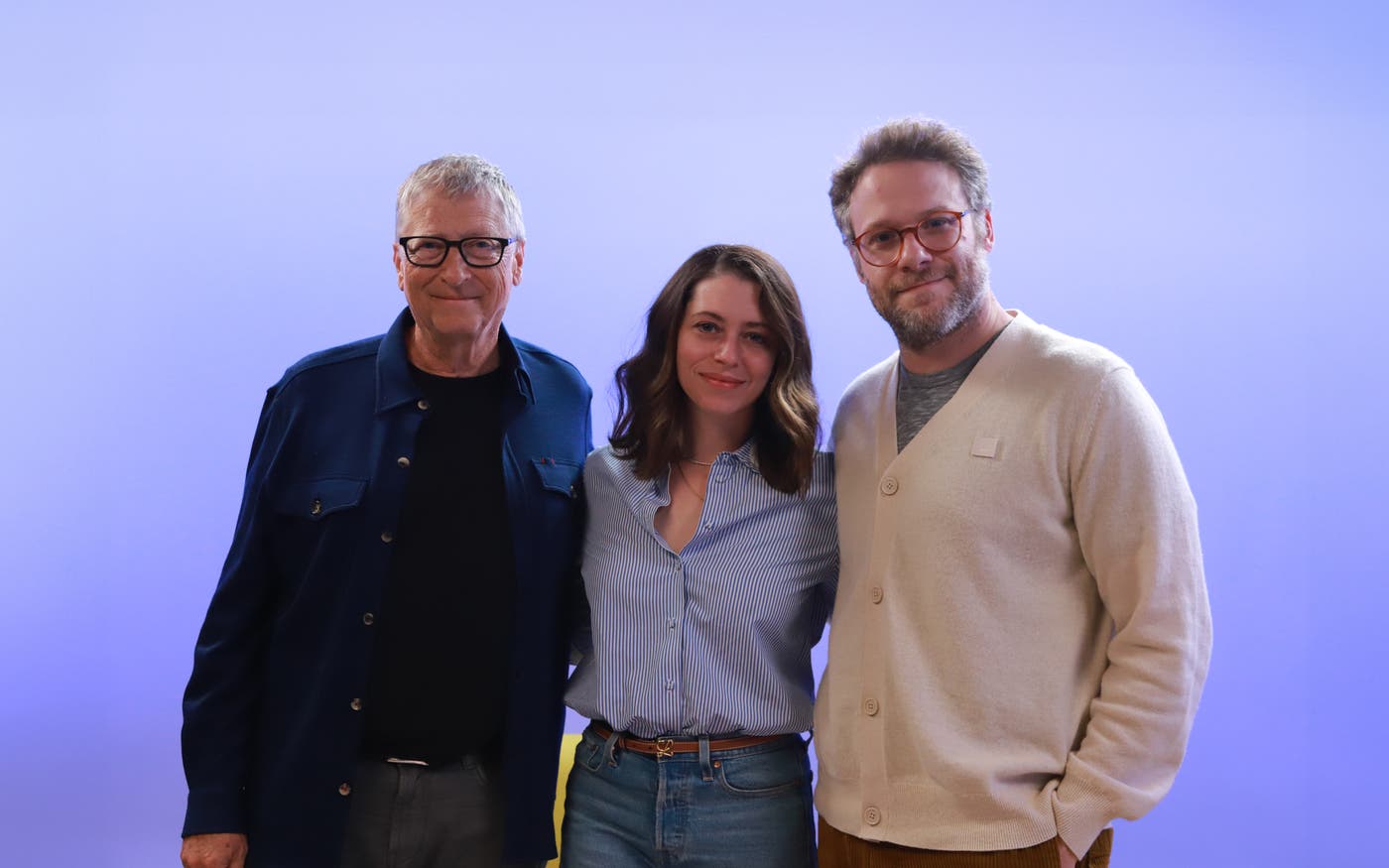
In the first episode of my new podcast, I asked Seth Rogen and Lauren Miller Rogen to help me understand how Alzheimer’s can be funny.
Can Alzheimer’s disease be funny? I was skeptical, especially given the devastating experience my family had watching my dad suffer from it. So, I asked two experts in using humor to raise awareness—Seth Rogen and Lauren Miller Rogen—to help me see the light. We had a great conversation about their organization Hilarity for Charity, hope for the future of Alzheimer’s research, the importance of a good night’s sleep, and why Seth started a cannabis lifestyle company.
High hopes
The reason I feel optimistic about the future of Alzheimer’s research
New breakthroughs in Alzheimer’s diagnostics may someday soon let us substantially alter the course of the disease.
This month marks one year since we lost my dad. It’s hard to believe that he’s already missed a full cycle of birthdays, holidays, and family get-togethers. My family is slowly learning how to adjust to life without him, although I don’t think things will ever feel normal again. I miss him every day.

My dad died from Alzheimer’s disease, which means that my family’s grief is far from unique. More people die from Alzheimer’s every year than from breast cancer and prostate cancer combined, and millions are suffering from the disease. Today, one out of every nine people aged 65 or older has Alzheimer’s disease. Too many families are being forced to watch their loved ones go downhill and disappear. It’s a brutal way to lose someone, and right now, there’s no way to stop or even slow down the decline.
I’ve written a lot on this blog about why I’m optimistic that new breakthroughs may someday soon let us substantially alter the course of the disease. One of the areas where we’ve seen the most progress over the past couple years is diagnostics.
The current process for diagnosing Alzheimer’s is a huge hurdle standing in the way of a breakthrough. If we’re going to find a game-changing treatment, we will need to test many different hypotheses, which would mean we need to conduct lots of clinical trials. That requires recruiting a lot of participants early enough in their disease that a drug might make a difference. But patients have to show signs of cognitive decline before they know to get tested—which means that their Alzheimer’s is already quite advanced—so many potential volunteers aren’t eligible. We need a cheap, non-invasive way to diagnose patients early before their symptoms get too bad.
The good news is that there are a number of promising new diagnostic tests in the pipeline. I partnered with the Alzheimer’s Drug Discovery Foundation to develop a philanthropic fund called the Diagnostics Accelerator several years ago with the hope that it would kickstart a bunch of new research. We were then joined by Jeff Bezos, MacKenzie Scott, the Dolby family, and several others to expand the effort. The first round of funding is expected to be completed by the end of the year, and many of the award recipients are already making terrific progress.
Some are working on diagnostics that may be available soon, like the simple blood test being developed at the University of Gothenburg in Sweden. Blood tests are the gold standard for diagnosing many diseases for a reason: they’re easy to administer and can be inexpensive to analyze. The test developed at Gothenburg looks for several indicators in the blood, including the presence of a protein called amyloid that can cause plaques in the brain. Samples are run through a common type of diagnostic platform developed by Roche, which means they can be analyzed at most labs.
Having an accessible blood test for Alzheimer’s would be huge. Many of us get our blood drawn once a year during our physical, and it’s easy to imagine a future where your results tell you how your brain is doing, just like how you currently get updates on the state of your heart. I’m hopeful this test will be available within the next year or two.
Other diagnostics in the pipeline use more unexpected methods to detect Alzheimer’s, like an eye test. Cecilia Lee—a researcher at the University of Washington here in Seattle—believes that your retina can provide a window into the brain. In 2018, she published a study showing that having an eye condition like glaucoma or macular degeneration doubles your risk for Alzheimer’s.
Ever since, she’s been looking for ways to use this link to diagnose Alzheimer’s. Cecilia and her colleagues are exploring different ways to scan your eyes for early signs of Alzheimer’s, including by using artificial intelligence to spot tiny irregularities that a human could never find. The UW team isn’t the only group hoping that the eyes are the key to a better diagnostic. Several companies including RetiSpec, Neurovision Imaging, and Optina Diagnostics are using new imaging techniques to look for amyloid plaques. We’re still years away from your annual eye exam including any test for Alzheimer’s, but I’m excited to keep following the research.
All of the tests I’ve mentioned require a trained medical professional and specialized equipment—but what if all you needed to assess your brain health was your smartphone? Several companies are working on highly sophisticated apps that might one day become diagnostics that are accessible to anyone with a phone or tablet. They have tremendous potential, although it’s too soon to tell whether any of them will pan out.
Cogstate is working on a test that looks like a series of mobile games. Each one evaluates a different function of your brain, like your ability to recognize emotions or focus on a task. A different company called Altoida is developing an app for your phone or tablet that uses augmented reality games to assess your cognitive abilities. (If you’ve ever played Pokemon Go, you’ve used AR.) If you score below a certain threshold on either test, your doctor could then order another diagnostic—like a blood test—to confirm whether you have the disease.
Nearly all of the tests I’ve mentioned are being supported by the Diagnostics Accelerator. The fund has invested in 25 candidates to date, and I’m hopeful that we have at least one game changer in the group. The Diagnostics Accelerator is also doing great work to make more samples and data available to researchers, which will hopefully speed up the time it takes to find a breakthrough.
If we want to stop Alzheimer’s, one of the biggest things we need to develop is a reliable, affordable, and accessible diagnostic. I think we’re close to having one, and the developments we’ve seen over the past couple years make me more optimistic than ever that we can one day stop Alzheimer’s. I can’t wait to see what new progress is unlocked thanks to better tests.
Solving the puzzle
Data could hold the key to stopping Alzheimer’s
More data sharing will accelerate progress towards an Alzheimer’s breakthrough.
My family loves to do jigsaw puzzles. It’s one of our favorite activities to do together, especially when we’re on vacation. There is something so satisfying about everyone working as a team to put down piece after piece until finally the whole thing is done.
In a lot of ways, the fight against Alzheimer’s disease reminds me of doing a puzzle. Your goal is to see the whole picture, so that you can understand the disease well enough to better diagnose and treat it. But in order to see the complete picture, you need to figure out how all of the pieces fit together.
Right now, all over the world, researchers are collecting data about Alzheimer’s disease. Some of these scientists are working on drug trials aimed at finding a way to stop the disease’s progression. Others are studying how our brain works, or how it changes as we age. In each case, they’re learning new things about the disease.
But until recently, Alzheimer’s researchers often had to jump through a lot of hoops to share their data—to see if and how the puzzle pieces fit together. There are a few reasons for this. For one thing, there is a lot of confusion about what information you can and can’t share because of patient privacy. Often there weren’t easily available tools and technologies to facilitate broad data-sharing and access. In addition, pharmaceutical companies invest a lot of money into clinical trials, and often they aren’t eager for their competitors to benefit from that investment, especially when the programs are still ongoing.
Unfortunately, this siloed approach to research data hasn’t yielded great results. We have only made incremental progress in therapeutics since the late 1990s. There’s a lot that we still don’t know about Alzheimer’s, including what part of the brain breaks down first and how or when you should intervene. But I’m hopeful that will change soon thanks in part to the Alzheimer’s Disease Data Initiative, or ADDI.
I worked with a coalition of partners to create ADDI, because we believe that more data sharing will accelerate progress towards an Alzheimer’s breakthrough. To make this happen, ADDI created the Alzheimer’s Disease workbench.
This workbench hosts an open, global, and easy-to-use set of tools and resources. The goal is to simplify how researchers and data scientists around the world work together and share data, code, and knowledge in order to make advances in the field.
Instead of having to navigate dozens of individual databases, scientists will be able to access and upload information to a patient database from around the world. The workbench also facilitates access to datasets from failed drug trials, since many pharmaceutical companies have decided that the benefits of sharing their data outweigh the risks. And all the data is in compliance with privacy laws, so researchers don’t have to worry about compromising anyone’s personal information.
I’m optimistic that this will make a real difference in Alzheimer’s research, because there are many examples where we’ve made progress on diseases after bringing together large amounts of data. One is malnutrition. Several years ago, our foundation launched an initiative to pool information about childhood growth to try to see when exactly a child who ends up stunted starts falling behind.
That information produced some fascinating insights. For example, we learned that, in South Asia, weather cycles play a huge role in whether a child recovers from a period where he or she doesn’t get enough to eat. If you’re born during monsoon season—when food can be harder to come by—you still have a decent shot at getting back on a normal growth curve eventually. But if your mother was in her third trimester during monsoon season, you’re much less likely to get back on track. This insight has implications for how we address malnutrition in that region, and we would have never discovered it without pooling lots of different data sources.
The Alzheimer’s workbench will finally be available to scientists this month after a year and a half in development. (If you work in data science or Alzheimer’s research, or are just a curious researcher, you can explore the AD Workbench here.) But even though the workbench is only now becoming broadly available, we’re already seeing huge benefits from it—just not on the disease we expected.
In the early days of the COVID-19 pandemic, our foundation decided to use the Alzheimer’s workbench framework to create a platform for sharing information on the novel coronavirus. This platform is letting scientists from all around the world collaborate to understand more about the virus and its impacts. Each insight we gain about the virus moves us closer to the end of the pandemic, just as each insight about Alzheimer’s moves us closer to a breakthrough.
I want to be clear: data alone is not going to find the miracle treatment or the diagnostic we need to stop Alzheimer’s (or COVID-19). But what it can do is let us test hypotheses and point us in the right direction.
Nearly forty million people around the world have Alzheimer’s or dementia today. We have no way to stop or even slow the disease at this point. I lost my dad to Alzheimer’s two months ago, and I wouldn’t wish that experience on anyone. My hope is that the data sharing facilitated by ADDI will move us closer to a world where no one has to watch someone they love suffer from this awful disease.
A daily fight
6 things you should know on World Polio Day
There’s good news and bad news about the eradication effort.
I’ve been following the fight against polio almost daily for more than two decades, ever since I got involved in the global coalition to eradicate it. But polio hardly ever makes headlines anymore, and most people are understandably not as focused on it as I am. So with World Polio Day coming up on Saturday, I want to give a quick update on how things are going.
Thanks to the world’s efforts—led by national governments with support from the Global Polio Eradication Initiative, which is a coalition of Rotary International, WHO, UNICEF, the United States CDC, the Gates Foundation, and the vaccine alliance known as Gavi—polio cases are down by 99 percent since 1988, and the virus is endemic in just two countries.
One of them, Pakistan, is making major progress. Thanks to continued vaccination programs and strong leadership from the government, the number of children newly paralyzed by polio there dropped from 74 in 2024 to 31 in 2025 and just 7 so far this year. I think it is possible to get to zero if we keep up this momentum.
In Afghanistan, unfortunately, polio cases have increased this year compared with last year. But the program is taking steps to do a better job getting the vaccine to all children, especially in the South region of the country. And it’s finding new ways to work with community leaders to hear from families who have doubts about vaccinations and to address their concerns.
Some encouraging news is coming out of Africa. Five variant polio outbreaks on the continent have been closed, interrupting transmission of the virus in those countries. It’s a testament to phenomenal work by governments at every level, local health workers, and the polio eradication initiative.
However, there continue to be outbreaks of variant polio in especially fragile settings. Humanitarian crises, weather-related disasters, and resource constraints are making it harder to vaccinate children. As global immunization rates remain low, the risk that the disease will spread internationally—even to places that have long been free of polio—is high.
India and South Asia have now been free of wild poliovirus for 15 years. This region, which is home to a quarter of the world’s population, recorded its last case of wild poliovirus in 2011. Staying polio-free since then is a huge accomplishment in itself. But countries in the region are also building on infrastructure and lessons from the polio program to expand people’s access to other public health services.
An affordable six-in-one vaccine is making it easier to protect children in low-income countries. In most low- and middle-income countries, children get their polio vaccines in two ways: orally, via a few drops in their mouth, and by injection. The injectable vaccines require two shots, the second one weeks or months after infants have received all their other routine shots. Many families don’t come back for this second visit, which means those children aren’t fully protected.
The six-in-one vaccine incorporates polio protection into the vaccines that children already get routinely, reducing the need for another injection later. When a baby gets the shots that protect them from whooping cough, tetanus, and so on, they’re also getting protection against polio.
Six-in-one vaccines aren’t new; they have been used in wealthier countries for years. The breakthrough was to develop one that’s affordable for low-income countries. Thanks to support from Gavi, Senegal and Mauritania are already using it, and Pakistan just approved its use last month.
I wish there were better news to share about funding. Even some of the most generous partners have cut back on their giving. GPEI, the eradication initiative I mentioned earlier, had to cut its budget by 30 percent this year. I am grateful to the donors who have stayed committed and to new donors who have made significant contributions in recent years. These include the Kingdom of Saudi Arabia, the United Arab Emirates, the European Investment Bank, Qatar, Australia, Canada, Monaco, and the United States.
This has accelerated a process that was already under way: lower-income countries taking more ownership of the program. For example, in the past 18 months, three more labs in Africa have been certified to do genomic sequencing of poliovirus samples. If the virus is detected somewhere on the continent, a sample can be sent to one of these labs, where scientists study its genome to figure out where it came from. The plan is to keep expanding capacity in Africa, further reducing the need to send samples overseas.
Unfortunately, none of this makes up completely for the funding shortfall. Around the world, leaders of polio programs are making painful tradeoffs. If this shortfall continues, we could lose decades of progress and see polio return everywhere. I’ll continue to do my part, supporting the work through the Gates Foundation and using my voice to raise awareness.
This is a winnable fight. It is giving us a blueprint for eradicating other diseases, including malaria. It has also created a global network of labs and experts that has alerted public health officials to outbreaks of cholera, measles, Ebola, and COVID-19 at the height of that pandemic.
But for me, what it comes down to is that we should eradicate polio because it is entirely preventable. There is no reason any child should ever be paralyzed by it again. That’s why I’m proud to be part of the global partnership that is committed to getting rid of it forever.
Body of evidence
Ramesh Ferris wants you to look at his legs
A powerful reminder of why polio eradication matters.
When Ramesh Ferris speaks in public, which he does a lot, he has an unusual way of getting to the stage. He crawls across the floor.
Ramesh was paralyzed by polio when he was six months old. Today, at age 46, he can walk with crutches and leg braces, but as an advocate for polio eradication, sometimes he chooses not to. He wants his audience to see what the disease does to the human body.
“I’m the voice of the polio survivors that I’ve met crawling in the streets of their communities,” he says. “Showing my legs is the most powerful tool I can use to educate people about the reality of what happens when kids don’t receive the polio vaccine.”
Ramesh contracted polio in 1980, when he was six months old. The first polio vaccine had been invented 25 years earlier, and millions of children had received it, but it still hadn’t reached low-income communities like the one in the state of Tamil Nadu, India, where he was born.
His birth mother had never heard of the disease, much less a vaccine for it. She just knew that her boy kept getting sick, and she couldn’t afford medical care for him, so she made what must have been an agonizing decision. She put him in the care of an orphanage in her community.
A year later, Ramesh was adopted by a Canadian couple who raised him and five other adopted children in the Yukon. Life was hard at times—kids at school mocked and bullied him—but he got expert medical care. Through three surgeries, doctors straightened his legs, and after intensive physical therapy, he learned to walk with crutches and braces.
When Ramesh was 22, he took a trip that changed his life. He went to India to meet his birth mother for the first time, so he could tell her how grateful he was that she had sacrificed so much so he could get the care he needed.
On the same trip, he had another powerful emotional moment. “I saw a fellow human being that had polio because he didn’t receive the polio vaccine as a child,” Ramesh says. “He was crawling around the streets as a beggar.” The person he was traveling with told him: “You’re looking at your life if you weren’t adopted.”
Since that time, Ramesh has been traveling around the world as a volunteer with Rotary International to spread the word about how much progress the world has made and the work that still remains. He’s raised awareness and funds with eye-catching campaigns including a 7,140 km trip across Canada… by hand bike.
We’re close to eradicating the disease—there were 52 cases of wild poliovirus in 2025, down from 350,000 in 1988—but finishing the job is a tough challenge that takes continued funding and effort.
People like Ramesh remind us not only how we can do it, but why we should.
Buzz off
Small bugs, big breakthroughs
Science holds the key to stopping deadly pests like mosquitoes and screwworms.
What do humans and cows have in common? Among other things, we’re both victims of tiny insects.
For cows, the latest culprit is the New World screwworm. Despite the name, the screwworm is actually a type of fly that likes to lay its eggs on animals like cows, which creates an often-fatal wound on the animal’s hide. Screwworms once killed up to one million cattle a year here in the United States, and sixty years after we eliminated them in our country, they’re back.
For humans, one of our greatest nemesis is the mosquito. There are plenty of reasons to hate mosquitoes, but malaria is easily at the top of the list. The disease kills more than 600,000 people every year, most of them children, and it’s transmitted when a mosquito infected with a parasite called Plasmodium bites you.
Protecting people (or cattle) from an insect poses an interesting challenge. How do you stop something so small from hurting anyone? There are lots of different ways to approach the problem.
One approach is to keep insects out of the places where people are. There are already lots of tools that do this with mosquitoes, with more in the pipeline. The most widely used is the bed net, a gauzy sheet of fabric treated with an insecticide that kills any mosquito that tries to reach the person sleeping under it.
Bed nets are magical. In some places where malaria is endemic in Africa, they’ve reduced the number of children who die before the age of 5 by 20 percent. But there’s a problem: Mosquitoes can develop resistance to the insecticide used in bed nets, just like bacteria can evolve resistance to antibiotics.
Enter the dual active ingredient bed net. (You’ll often see them referred to as dual AI nets, even though they have nothing to do with artificial intelligence.) By treating bed nets with two different insecticides, scientists have been able to figure out how to negate a mosquito’s resistance and keep people safe. The catch is that dual AI nets are more expensive than regular bed nets, which is why the Global Fund and the Gates Foundation stepped in to make them affordable for the countries that needed them most. The results so far have exceeded my expectations. Dual AI nets now make up more than half of the bed nets used, just two years after they became available.
Bed nets have another flaw: They only protect you while you’re under them, even though mosquitoes are also active in the hours before you go to sleep and after you wake up. A new tool called a spatial emanator aims to bridge that gap. It basically works like a plug-in air freshener—but instead of releasing a nice fragrance, it slowly releases an insecticide at a low-enough dose that doesn’t harm people but drives away any mosquito that might enter your home.
When spatial emanators received the green light for use a year ago, they became the first new malaria-prevention tool the WHO has recommended in over a decade. I’m super excited about their ability to protect people from mosquitoes for more hours of the day.
Another approach to stopping insects is to target them at the population level. That’s how the world stopped screwworm the first time. In 1954, scientists figured out a way to use radiation to make the males sterile. They released the neutered insects into the target area, and since they couldn’t reproduce, the population died off. This approach worked sixty years ago, and it still works today (and scientists are working on even more effective methods).
What if we could use a similar approach to stop mosquitoes? Last year, I wrote about an incredible project in Tanzania called Transmission Zero. The idea behind it is simple: a mosquito that can’t give you malaria.
Tanzanian scientists have found a way to make Anopheles gambiae mosquitoes—the species responsible for most of the malaria in Africa—produce two types of molecules, naturally found in frogs and bees, that block the parasite from developing inside the insect. The mosquitoes would continue flying around, doing their mosquito business, but they wouldn’t be able to make anyone sick with malaria. Each time they mated with another mosquito, they would pass on the gene that protected them from the parasite. (I just published a new profile of Dr. Lina Finda from the Ifakara Health Institute in Tanzania, who is helping lead this work.)
These malaria-free mosquitoes could potentially help save tens of thousands of lives every year. And Tanzania isn’t the only country on the cutting edge of advancing this work. The Ugandan Virus Research Institute and the University of Sciences, Techniques and Technologies of Bamako in Mali are also doing pioneering work to move the field forward. Scientists are learning more every day about the role mosquitoes play in ecosystems, and research is now underway on two other species beyond Anopheles gambiae.
Dual AI bed nets, spatial emanators, and malaria-free mosquitoes are just the latest breakthroughs to come out of the robust malaria innovation pipeline. Treatments continue to get better, and vaccines are already proving to save lives, with even more effective next-gen vaccines to come. A lot of interesting work is underway with endectocides, a type of drug that could potentially make your blood toxic to mosquitoes. There’s even a fascinating trial that looks at whether targeting mosquito larvae in rice paddies could make a difference. The goal of this trial is to stop malaria, but early results from Nigeria and Rwanda indicate that larval control could boost rice yields as much as 50 percent, which would be incredible for farmers.
Unfortunately, while the R&D progress we’re making is remarkable, the same can’t be said for the fight against malaria overall. Donor governments are cutting health aid—including money for the Global Fund, which has saved more than 70 million lives to date by helping deliver lifesaving tools like bed nets. Last year, our partners across Africa pulled off a miracle to minimize the impact of the cuts. With support from our foundation, they found creative ways to distribute supplies that were already in warehouses across the continent.
This year, the picture looks different. While some funding has since been restored, cuts from multiple donor governments mean it's not yet enough to guarantee bed nets and other tools reach every family who needs them. Our foundation is doing everything we can to help close that gap. I continue to advocate for increased funding, because it is ridiculous to put the health of the world’s children at risk when we know how to save them.
I believe we can end malaria forever. We have some of the tools we need already, and I think we’ll have the rest soon. We can defeat mosquitoes, just like we stopped screwworm more than half a century ago and just like we’ll stop it again. The question is whether the world will choose to make it happen.
The choice is obvious to me. We have an opportunity to ensure that no child dies from malaria ever again. Let’s take it.














Eye opener
What my favorite chart leaves out
Every year, 2 million babies are stillborn. A simple retinal scanner can change that.
If you’re anything like me, you have a favorite chart. Mine has been the same for years. It plots under-five mortality year over year—a figure that has dropped by half since the turn of the century, from over 10 million deaths in 2000 to fewer than 5 million in 2023.
In my view, this data is the strongest evidence we have that progress is possible, even in tough times, and that the investments the world has made in vaccines, oral rehydration, bed nets, and better nutrition are working.
But there's a rule in global health statistics that complicates the story: To count as a death, someone must have first been born alive. It sounds simple and obvious. But in practice, it isn't. That's because every year, about 2 million pregnancies end in stillbirth, which is when a baby is lost at 28 weeks or later. That's late enough that the mother has been feeling the fetus move for months. Many parents have already picked out a name. Often, the loss occurs in the final stretch of a pregnancy, or during labor itself, when everyone was expecting a healthy birth.
These tragedies should be central to how we measure child survival. Instead, they've fallen through the cracks—not quite a maternal health issue, not quite a child mortality issue. The UN didn't publish its first full global estimate of stillbirths until 2020, and stillbirth research is still badly underfunded in both rich and poor countries.
What gets measured gets managed, as the saying goes—and what doesn't, well, doesn't.
The data reflects this disparity. Stillbirths have fallen just 34 percent since 2000, compared to 50 percent for under-five mortality over the same period. In 81 countries—mostly low- and middle-income—the stillbirth rate hasn't meaningfully improved at all in 25 years. For every one stillbirth in Europe, there are roughly 40 in sub-Saharan Africa.
What's frustrating is that we know what causes, and therefore how to prevent, most stillbirths. One of the biggest drivers is pre-eclampsia—a dangerous spike in blood pressure during pregnancy—which is responsible for half a million fetal deaths every year, along with 70,000 maternal deaths. Beyond that, the bulk of stillbirths stem from a cluster of conditions we understand well: maternal infections, obstetric complications during labor, and chronic conditions like untreated diabetes.
If we could catch these problems earlier, we'd have a much better chance of intervening before it's too late. But that's hard to do in the rural clinics where most pregnant women receive care, which often have unreliable electricity, no specialists, and little in the way of lab equipment. By the time pre-eclampsia is obvious, or gestational diabetes has gone unmanaged through the third trimester, the harm is often irreversible. Even emergency intervention may not help.
But a few months ago, I got to hold a device that has the potential to make a huge impact: the Remidio fundus camera. You hold it up to a patient's eye to get a high-resolution image of their retina in seconds, no dilation required. A community health worker with a few hours of training can use it. The device itself is about the size of a handheld video camera, battery-powered, and portable enough to carry from village to village.
Why the retina? It's the only place in the body where you can see blood vessels from the outside.
Remidio is a medtech startup out of India, and its camera was originally built to screen for diabetic eye disease. With an AI system running on a phone the camera plugs into, it can pick up early signs of the disease that would otherwise require blood draws and specialist follow-up to catch. It's already been used that way for more than 15 million patients in 40 countries.
But that same hardware, with different software, can also flag the conditions that drive so many dangerous pregnancies. Gestational diabetes sharply increases the risk of pre-eclampsia, preterm birth, and fetal death, and in most of rural sub-Saharan Africa or South Asia, it usually isn't screened for at all, because the standard test requires a lab. A retinal scan offers a different way in. Remidio’s device is currently being used in India to screen pregnant women for conditions that drive stillbirth. And researchers are now adapting the same hardware to screen for anemia and hypertension, too.
A tool like Remidio’s won’t solve the problem of stillbirths alone. We also need more skilled birth attendants, better emergency obstetric care, and stronger health systems. But small, portable, affordable diagnostics in the hands of community health workers are exactly the kind of lever that can start to move a number that hasn't moved in a long time. That's a big part of why the foundation committed $2.5 billion to women's health research and development last year, our largest investment in this area ever.
In 25 years, I hope my favorite chart in the world will have two lines on it: one tracking under-five mortality, and one tracking stillbirths. With the right commitment, I believe both will have fallen dramatically, and both could be approaching zero.

Proof of progress
Bad news isn’t the only news
There are reasons to be hopeful about the future, if you know where to look.
Sometimes when I tell people I’m optimistic about the future, they look at me like I’m crazy. How could I say that when there’s so much violence in the world, the international order seems to be collapsing, and AI may end up doing more harm than good?
I see all these problems too, and I’m deeply concerned about them. (I am working on a long memo about the risks and benefits of AI that I plan to publish later this month.)
But through my work with the Gates Foundation and other organizations, I also get to see signs of progress that help me stay optimistic.
To me, being hopeful about the future doesn’t mean you ignore the bad news. It’s actually the opposite: You look directly at it and then search for people who are doing something about it. In most cases, you’ll find them. And then you will start to see the broader trend of progress they are contributing to.
Here are some of my favorite signs of progress.
IN THE PAST:
- We’ve cut the number of children who die every year by more than half, from more than 9 million in 2000 to fewer than 5 million now.
- For the first time, we have a blood test for Alzheimer’s and drugs that may slow its progress.
- Electric vehicles now make up about one in four new cars sold worldwide, with sales topping 20 million in 2025.
- There are 1.5 billion fewer people living in extreme poverty today than in 1990, even though the population has risen 50 percent since then.
- Nearly 95 million girls have been fully immunized with HPV vaccine, so they’re much less likely to develop cervical cancer later in life.
- More than 86 percent of the world’s adults can read and write, up from about 68 percent in 1979.
IN THE PIPELINE:
- The newest obesity drug in trials produces nearly 30 percent weight loss, almost as good as what surgery achieves. The same class of drugs is expanding fast into related conditions, including sleep apnea, fatty liver disease, and hopefully, osteoarthritis.
- Scientists are developing a single-shot cure for sickle cell disorders, which kill tens of thousands of people every year, and it could be available within five years. The underlying technology is also being used to develop a single-shot HIV cure.
- We’re close to eradicating polio, which is endemic in only two countries. We’re nearly done with Guinea worm disease as well, cutting it from 3.5 million cases in 1986 to just ten last year.
- The mRNA technology behind some COVID vaccines is now being used for cancer vaccines, with nearly 100 in clinical trials for melanoma, lung, pancreatic, and other cancers.
- A new tuberculosis vaccine is in final-stage trials. If it works, it will be the first new TB vaccine in more than a century and could prevent tens of millions of cases over the next 25 years.
I love telling these stories. Here’s a video where you can see the amazing impact of the Green Revolution.
I find that trying to keep a positive attitude is valuable in itself. It keeps me grounded so I don’t swing toward one political extreme or another. I think the world might be less polarized if more people had a sense of the positive things that are going on in addition to the problems we need to solve.
You can find more videos here about progress. If you see one that strikes a chord for you, I’d encourage you to share it.
Blue-sky thinking
For an affordable climate win, look to the sky
If we got rid of some contrails, we could eliminate up to two percent of all global warming.
When I was growing up in Seattle, planes were everywhere. Boeing was the biggest employer in the area, and it felt like almost every adult I knew had some connection to the company. Neighbors, family friends, and even several of my teachers all worked in aviation at some point. I remember looking up at the planes that flew over my house and thinking about the engineers who put them there.
Today, many decades later, I still find myself thinking about planes a lot. They’re a major contributor to climate change and a key focus of our work at Breakthrough Energy. Aviation is one of the hardest parts of the economy to decarbonize. Keeping a 90,000 lb. passenger jet in the sky is an engineering miracle on its own. Finding a way to do that without adding significant weight and while maintaining necessary safety standards is no easy feat.
Everyone knows planes create carbon emissions when they burn jet fuel. To reduce emissions from shorter and regional flights, electric and hybrid aircraft are in development. For longer flights, we need sustainable aviation fuels, or SAF, which can drop into existing engines to power them with substantially lower lifecycle emissions. Amazing work is being done on both fronts, but we’re still years away from either being used at scale.
But jet fuel isn’t the only way that planes are warming the planet. Condensation trails—commonly called “contrails”—are the lines you’ll sometimes see left behind a plane as it flies, and they are also a significant contributor to climate change.
There are a lot of misconceptions about contrails. Some people refer to them as “chemtrails” and believe they contain toxic chemicals. The reality is much less dramatic: They’re just clouds.
Contrails are an unintentional byproduct of plane travel, and no one is putting lines in the sky on purpose. In fact, researchers are looking for ways to stop them from forming—not because they’re poisonous, but because they make the planet hotter. The science behind how that works is fascinating.
You may have noticed that, while some planes create contrails, others do not. A plane needs to fly through a pocket of air with the right temperature and the right humidity. If it does, water nucleates around the tiny soot particles that come out of the plane’s engine and freezes into ice crystals. Most contrails dissipate quickly and don’t interfere with the climate. But in the right conditions, some can linger, spread for hours, and become cirrus clouds.
Cirrus clouds are a natural phenomenon. If you look outside your window right now, there’s a good chance you can see them in the sky. (They’re the high, wispy clouds that look like brush strokes.) Cirrus clouds are one of the most common types of cloud, and they play a critical role in helping the planet regulate its temperature.
Like natural cirrus clouds, contrails reflect sunlight entering our atmosphere and absorb heat before it can leave. That’s fine during the day, but at night, contrails trap heat that would otherwise escape to space. These warming contrails are the ones we need to prevent.
Persistent contrails are responsible for about half of the temperature increase caused by aviation. If we were to get rid of them, we would eliminate up to two percent of all global warming. Doing this would cost less than ten dollars a ton of emissions avoided (probably around a dollar or two), compared with $130 or more per ton for SAF. That’s a mind-blowing impact for such a relatively cheap intervention.
Compared to other climate interventions, it’s relatively simple to stop contrails from forming in the first place. We know what conditions are required to create contrails, and we know how to find them. If we can change the route a plane takes to avoid those zones, we can prevent the kind that contribute to climate change.
Rerouting a plane slightly to avoid atmospheric conditions is nothing new. Every flight you’ve ever taken has followed a path designed to minimize turbulence and stay away from bad weather. Sometimes this path is the shortest distance between your departure city and your destination, and sometimes it involves a little extra flight time. Airlines factor this deviation in when scheduling flights, so you rarely notice it. We can use the same approach with contrails.
To avoid the majority of warming contrail regions, we would need to adjust the routes of just five percent of flights globally. When an airline files the flight plan for a specific flight—usually about 4-8 hours before departure—they can include any adjustments needed to avoid areas that will create warming contrails. These areas of the sky tend to be thin. So instead of steering around them, the most efficient approach is usually to fly either a little bit below or above the zone.
You might be wondering, “But what about the extra fuel burned by avoiding these contrail zones?” It’s a good question, and it’s an important concern to consider. While it’s true that rerouting to avoid contrails may burn more fuel, the reality is that it uses such a minuscule amount—as little as 0.1 percent more fuel when averaged across all flights—that the contribution to climate change is far smaller than that of the potential contrail. And that extra fuel matters even less as cleaner fuels like SAF scale up.
The benefits of preventing contrails are undeniable. The question is how we make contrail avoidance standard practice. I helped start a nonprofit called Contrails.org that is doing amazing research into the problem and developing open-source software that airlines can use to plan routes. (I recommend playing around with the contrails map they have on their website.)
It’s really fantastic to see all the partnerships that have been built to do this work. Last year, Contrails.org teamed up with American Airlines and Google Research to fly more than 100 flights using contrail avoidance, and now they’re working with partners on a landmark study backed by the UK government called Operation Blue Skies. This winter and next, some flights passing through the Shanwick airspace off the west coast of the UK will have their routes adjusted slightly by air traffic control to avoid creating contrails. I’m excited to see the results. The more research is done, the clearer the importance of this work becomes. With the right cooperation, we can scale this effort out and have a massive impact.
At the same time, I recognize that I am an imperfect messenger to write about this topic. I fly in private planes, after all. Shrinking those contributions is a responsibility I take seriously, which is why I make sure that any flight I take follows a route that avoids creating warming contrails. I also use SAF when I fly and fully offset my family’s aviation emissions.
The big question around this work is whether there’s enough of an incentive for airlines to buy into it. Avoiding turbulence is a safety issue, and it’s also good business—passengers don’t like a bumpy ride and, in the worst case scenario, severe turbulence can cause injuries. The economic benefits of avoiding contrails are less obvious, which is why Contrails.org offers its software for free. (Airlines pay to subscribe to flight planning systems that, among other things, help them plan for weather.) Still, I’m hopeful that contrail avoidance will become part of the air traffic modernization process that’s happening in countries around the world right now.
When I first learned about contrails and saw the math, I couldn’t believe it. What do you mean that, for a very modest cost, we can eliminate up to two percent of all global warming? For just a dollar or two per ton, we can get rid of something that makes the world hotter. That’s the kind of progress we need to make now while other innovations scale up and deploy.
Power play
The next generation of electricity is almost here
I’m in Texas this week to talk about the remarkable breakthroughs fueling our zero-emission future.
Greetings from the Lone Star State! I’m in Texas this week for the Breakthrough Energy Ventures Investors Summit. This is one of the best places in the world to see the future of energy, and I can’t wait to see how much progress has been made since my last visit.
There’s a lot on the agenda this week, but I’m especially excited to talk about electricity breakthroughs. By 2050, the world will need nearly three times as much power as we use today—and if we’re going to decarbonize the economy, we’ll have to electrify a lot of things that currently use fossil fuels. That means we need to deliver a huge amount of energy in a clean, reliable, and affordable way.
If you’re an electricity nerd like me, this is an exciting moment. Earlier this month, TerraPower—the next-generation nuclear power company I created in 2008—received federal approval to start building the nuclear reactor at its Kemmerer, Wyoming plant. Wind and solar are reportedly generating more electricity than fossil fuels in the EU for the first time. We’re seeing a clear shift as the world’s electricity system is becoming more diverse, more innovative, and more dynamic than ever before.
Here are three of the coolest technologies people will be talking about this week:
Geothermal. Geothermal power has been around for more than a century, but new approaches are unlocking greater potential for the technology. Most geothermal power plants today are located near the boundary between two tectonic plates, where you don’t have to drill as deep to find usable heat that can be pumped to the surface to turn a turbine and generate electricity.
Fervo wants to make geothermal an option in more places by both digging deeper (up to a mind-blowing 15,000 ft below the surface) and extending their wells horizontally at their deepest point. The results so far are super promising: Their pilot project has been consistently generating electricity since 2023, and their Cape Station plant in Utah will come online this year.
Fusion. Fusion is the reaction that powers the sun and stars, and it has the potential to be a virtually unlimited source of clean, safe electricity. Once the technology is fully commercialized within the next decade, it can be built anywhere, scaled up, and used to make huge amounts of electricity with no carbon emissions and minimal waste.
The question right now is how we get there. It seems likely that the first commercial fusion plants will use magnetic fields to harness the reaction to generate electricity. There are two different approaches to this: the tokamak, a donut-shaped machine that is easier to build but harder to keep stable, and the stellarator, a twist-shaped machine that is harder to build but easier to keep stable. (An unstable reaction can damage the machine but poses no risk to safety.) Commonwealth Fusion Systems is on track to turn on their SPARC tokamak next year, and Type One Energy is making great progress with their Infinity One stellarator. Marathon Fusion, Xcimer, and Zap Energy aren’t quite as far along with their approaches, but I’m optimistic about what they’re doing.
Geologic hydrogen. Hydrogen shows great promise as an energy source, and the discovery of geologic hydrogen is one of the biggest energy surprises of the past decade. Although it’s the earliest stage technology on this list, I’m excited about its potential. Geologic hydrogen is a zero-emission power source that is continuously generated underground by the Earth itself. Bourakébougou, a village in Mali, is powered by the small hydrogen field it sits on top of, and researchers have found deposits in the U.S., France, and other places.
This is an unusual technology to talk about because it’s hard to predict a timeline. It could take decades before geologic hydrogen becomes commercially viable at scale—or a company like Koloma or Mantle8 could find a massive deposit tomorrow, and then we’re off to the races. Once we find one really good source, it’ll be much easier to find the second because we’ll know exactly what we’re looking for.
If I could hop in a time machine and see what the future looks like a few decades from now, I would expect to see at least one of these technologies generating a significant chunk of the world’s power. It’s amazing to see so much progress being made in so many different areas, because it means that we’ll have options for how we generate affordable, reliable, clean electricity at the scale the future demands.


Positive charge
The future of energy is subatomic
Demystifying the science behind fission and fusion
I’m lucky to learn firsthand about some of the world’s most cutting-edge technologies. I’ve seen artificial intelligence ace an AP biology test, long before AI became an everyday tool. I've seen genetically modified mosquitoes stop malaria in its tracks. I've seen geothermal wells go 15,000 feet below the surface of the earth.
But if I had to pick the coolest thing I work on, it's hard to beat harnessing the power of atoms to fuel our world.
Both fission energy and fusion energy release large amounts of energy by altering the nucleus of an atom. Fission already provides safe, reliable clean electricity around the world, and I believe that fusion will too one day soon. And both will play a key role in meeting humanity’s growing need for energy while also eliminating carbon emissions
The two technologies often get lumped together, which is understandable given how similar they seem on the surface. But the reality is that, in many ways, fission and fusion are opposites. Knowing how each one works—and why they are different—is critical to understanding the roles they will play in the decades ahead.
When people talk about “nuclear power,” they are almost always talking about fission. Fission has been powering homes around the world since 1954 (the year before I was born!). Although the technology has evolved a lot over the years—and continues to improve, as I’ll explain—the fundamental physics remains the same.
The nucleus of every atom is made up of subatomic particles called protons and neutrons. Some atoms, like uranium-235, have unusually large and heavy nuclei that make them unstable. If you fire a neutron at a uranium-235 atom, its nucleus breaks apart into smaller atoms—releasing energy in the form of heat. (The amount of energy released is enormous: the change in the mass of the atom times the speed of light squared. You may know this as E=mc2.)
As the nucleus splits, it also releases its neutrons. These neutrons bounce around at incredible speeds until some eventually collide with other nuclei. This sets off a chain reaction as each collision results in the release of more heat and more neutrons.
The heat created by this chain reaction is harnessed to turn water into steam. The steam is then used to turn turbines, which convert the motion into electricity. This power is sent via the power grid into homes and businesses—all without releasing any harmful emissions into the atmosphere.
These steps form the backbone of all fission power, but beyond the core reaction, there are lots of different ways to build a nuclear power plant. Most use pressurized water to keep the core at a stable temperature. Others use carbon dioxide gas or something called heavy water. TerraPower, the nuclear company I started back in 2008, uses liquid sodium.
I first became interested in fission twenty years ago when I asked a couple of my smart physicist friends if there was a better way to build nuclear power plants. Nuclear has lots of advantages, but it has some challenges: The plants are expensive to build, and human error can cause accidents. We need next-generation nuclear technology that solves these problems, which is where TerraPower fits in.
The company’s Natrium reactor is far safer than any existing plant, with the temperatures held under control by the laws of physics instead of human operators who can make mistakes. It has a shorter construction timeline, is cheaper to run, and can be operated by former fossil plant workers with minimal retraining. And, when the plant comes online in 2030, it will be reliable, providing dependable power throughout the day and night.
Fission energy is a well-established technology that we’re trying to improve. In contrast, generating electricity from fusion is something totally new.
While fission is all about splitting atoms, fusion is all about combining them. Fusion is the reaction that powers the sun and stars, but it has been a decades-long challenge to reproduce those intense conditions here on Earth. Now it’s within reach for reasons I will explain, but first, you need to understand how fusion works.
You start with a simple gas like hydrogen. If you make it extraordinarily hot while it’s in an electrically charged state known as plasma, the particles start moving so fast that they hit one another and fuse together.
When the hydrogen atoms fuse, they become helium. In the process, they release a great deal of heat. This reaction is what powers the sun, and it can be used to turn water into steam that pushes a turbine and generates electricity.
The challenge is getting the hydrogen particles hot enough to fuse. Because the sun is so large, the gravitational pressure in its core creates temperatures around a mind-blowing 15 million degrees Celsius. Here on Earth, one way to reach the right temperatures is by containing the plasma inside a magnetic field—although this is hard to do without using more energy than you generate. Scientists are experimenting with different kinds of devices, including the donut-shaped tokamak and the twisted spiral stellarator.
Once a fusion reaction is up and running, it’s totally safe. There’s no chain reaction to run out of control, because the fusion ceases as soon as you stop supplying fuel or switch off the device that’s containing the plasma. (Fun fact: Fusion machines are regulated as the same class of technology as MRI machines.) Plus, the fuel is cheap and plentiful. The process uses two types of hydrogen that are extracted from sea water and created inside the fusion machine itself.
Researchers have been chasing the dream of commercial fusion power generation since the 1950s. Although they learned a ton about the science in the process, fusion power remained elusive—until 2022. That’s when scientists at Lawrence Livermore National Laboratory in California achieved what is called “ignition”: the moment when heat from the fusion process helped sustain the reaction, a key step toward commercial fusion energy’s requirement of releasing more energy that was put in.
In just three years since then, the race to commercialize fusion energy has sped up. Commonwealth Fusion Systems, a company I support through Breakthrough Energy, is the farthest along: They’re on track to put power on the grid in the early 2030s using their tokamak called ARC, which is compact and uses high-temperature superconductors to create the magnetic field. Other companies making terrific progress include Marathon Fusion, Type One Energy, Xcimer, and Zap Energy.
It's great to see so many companies trying different approaches to fusion energy. As those designs come out, we’ll have to see which is the cheapest way to generate the heat that you turn into electricity. The more designs we have that work, the more likely it is we’ll be able to lower the cost of electricity significantly compared to today.
The first TerraPower plant is currently being built in Kemmerer, Wyoming. Many of the facilities’ support buildings are well underway, and construction is about to begin on the “energy island,” where the steam turbines and other machinery that generate power will sit. The Nuclear Regulatory Commission is currently reviewing the company’s application to start on the actual nuclear reactor. I’m hopeful that we’ll start building the “nuclear island” next year, ahead of the plant coming online in 2030. And once the first plant is up and running, it’ll be much faster and cheaper to build additional plants.
Fusion power is a bit further away but still coming in the near-term future. CFS expects to see its SPARC prototype demonstrate net fusion energy within the next two years. They’ve secured the site of their first power plant in Chesterfield County, VA, and they’ve already signed two major customers: Google and Eni, an Italy-based global energy company. I’m optimistic the ARC power plant will come online within the next decade. When that day comes, it will be a huge win for America’s energy independence—and for the world’s quest for abundant sustainable energy.
Consider this: If you know how to build a fusion power plant, you can have unlimited energy anywhere and forever. It’s hard to overstate what a big deal that will be. The availability and affordability of electricity is a huge limiting factor for virtually every sector of the economy today. Removing those limits could be as transformative as the invention of the steam engine before the Industrial Revolution.
This transformation will dramatically improve human welfare around the world—and especially for the world’s most vulnerable people. Making cheap electricity is super important. If you don’t have power, there’s a real limit to how much you can develop economically. As crazy as it seems now, I believe that we will one day be able to put fission and fusion power plants in the most remote parts of the world.
The biggest challenge is, as with all technology development, building the first one. Once you’ve proven that your concept works, it is exponentially easier and cheaper to build the second plant, and then the third plant, and so on. Eventually, the price of electricity will come down even below the cheapest way we make electricity today.
Both fission and fusion are fundamental technologies for humanity to power everything we do. We’re on the cusp of massive breakthroughs, and it’s clearer now than even before: The future of energy is subatomic.

Turn up the heat
Utah’s hottest new power source is 15,000 feet below the ground
I recently visited Cape Station, the future home of the world’s largest enhanced geothermal power plant.
When my son, Rory, was younger, we used to love visiting power plants together. It was the perfect father-son activity (for us, anyway), and we always had a blast checking out the huge equipment and learning how it was used to generate electricity.
One of our more memorable trips was to a geothermal power plant that was close to the Þríhnúkagígur volcano in Iceland. I remember looking at the huge plumes of hot steam emerging from the ground and thinking about how amazing it was that people could harness heat thousands of feet below the surface to keep the lights on.
That feeling came back to me earlier this year during a visit to Cape Station, the future home of the world’s largest enhanced geothermal power plant, in Beaver County, Utah.
Few people associate geothermal energy with the United States, and for a good reason: Less than 1 percent of the energy generated in the U.S. is geothermal. A company called Fervo Energy is hoping to change that with an innovative new approach to turning the earth’s heat into power.
Breakthrough Energy and I are proud supporters of Fervo, and it was super cool to see firsthand how much progress has been made at Cape Station. The company’s pilot project in Nevada came online in 2023 with a capacity of 3.5 MW—enough to provide power to about 2,600 homes. Cape Station will be much bigger. Fervo has already drilled 20 of the 24 planned geothermal wells at the facility for Phase I, and the plant is expected to start generating 100 MW of power next year. An additional 400 MW will come online in 2028.
Geothermal is one of the most promising ways to deliver clean energy that’s reliable and affordable. In order to meet the world’s growing energy needs, we are going to need lots of different ways of making energy. Intermittent power sources like wind and solar will play a key role, but we also need sources of energy that work around the clock without contributing to climate change, like geothermal and nuclear power.
The science behind geothermal energy is pretty simple. The interior of the Earth is incredibly hot, and the deeper you go, the hotter the ground becomes. If you pump fluid deep enough to be warmed by this heat and then pump it back to the surface, you can turn the hot liquid into steam and use it to spin turbines and generate electricity—just like many other types of power plants.
The reality of harnessing that energy is a lot more difficult. In some places, you only need to go down a few hundred feet to reach the heat you need. In other places, you have to dig down a mile or more. Most wells at Cape Station are between 8,000 and 9,000 feet deep, and the deepest one extends a mind-blowing 15,000 feet below the surface. That is about the depth you'd get to if you stacked 50 Statues of Liberty on top of each other!
Most geothermal power plants today are located near the boundary between two tectonic plates, where you don’t have to drill as deep to find usable heat. That’s why you see them more often in geologically active places like Iceland or California. But Fervo’s approach will make geothermal energy an option in more places.
One of the company’s biggest innovations is the use of horizontal drilling. Instead of just digging straight down, Fervo extends its wells horizontally by as much as 5,000 feet at their deepest point.
This technique is often used by the oil and gas industry to increase contact with a reservoir. The same principle applies to geothermal power. By accessing more heat from the same depth, Fervo’s plants cost less and are viable in more places than traditional geothermal plants. They’re also easier to scale up, which is crucial for meeting the world’s energy needs.
Because these techniques are nearly identical to ones used by the oil and gas industry, Fervo is able to employ workers from that field with minimal retraining. Sixty percent of the company’s employees used to work in oil and gas, including its CEO.
Horizontal drilling isn’t the only thing that sets Fervo’s approach apart. When most people picture a geothermal power plant, they imagine clouds of steam emerging from the ground—like the kind Rory and I saw in Iceland. But if you visit the Cape Station plant when it comes online in 2026, you won’t see any steam at all.
That’s because the plant will use a closed system. Geothermal energy is one of the more climate-friendly sources of power, but one of its downsides is how much water it uses. (All of the steam you see escaping is water lost.) Fervo’s technology captures all the water that would’ve been lost and recirculates it underground to keep the system running.
It’s a truly innovative approach, and I am glad that it is being deployed here in the United States. I was honored to be joined by Senator John Curtis for our tour of Cape Station. We had a great conversation about the role companies like Fervo will play in maintaining America’s energy independence. I told him how great it was to see Utah leading by example—not just on energy innovation friendly policies but on actual deployment.
This is the kind of effort that will help our country remain a leader in energy innovation worldwide. I used to think that geothermal would never be more than 5 percent of the global energy mix. But now I believe it could eventually supply up to 20 percent of the world’s electricity. Geothermal power will have a big role to play in our clean energy future, and it’s exciting to see companies like Fervo push the technology to new depths.
A new way to look at the problem
Three tough truths about climate
What I want everyone at COP30 to know.
There’s a doomsday view of climate change that goes like this:
In a few decades, cataclysmic climate change will decimate civilization. The evidence is all around us—just look at all the heat waves and storms caused by rising global temperatures. Nothing matters more than limiting the rise in temperature.
Fortunately for all of us, this view is wrong. Although climate change will have serious consequences—particularly for people in the poorest countries—it will not lead to humanity’s demise. People will be able to live and thrive in most places on Earth for the foreseeable future. Emissions projections have gone down, and with the right policies and investments, innovation will allow us to drive emissions down much further.
Unfortunately, the doomsday outlook is causing much of the climate community to focus too much on near-term emissions goals, and it’s diverting resources from the most effective things we should be doing to improve life in a warming world.
It’s not too late to adopt a different view and adjust our strategies for dealing with climate change. Next month’s global climate summit in Brazil, known as COP30, is an excellent place to begin, especially because the summit’s Brazilian leadership is putting climate adaptation and human development high on the agenda.
This is a chance to refocus on the metric that should count even more than emissions and temperature change: improving lives. Our chief goal should be to prevent suffering, particularly for those in the toughest conditions who live in the world’s poorest countries.
Although climate change will hurt poor people more than anyone else, for the vast majority of them it will not be the only or even the biggest threat to their lives and welfare. The biggest problems are poverty and disease, just as they always have been. Understanding this will let us focus our limited resources on interventions that will have the greatest impact for the most vulnerable people.
I know that some climate advocates will disagree with me, call me a hypocrite because of my own carbon footprint (which I fully offset with legitimate carbon credits), or see this as a sneaky way of arguing that we shouldn’t take climate change seriously.
To be clear: Climate change is a very important problem. It needs to be solved, along with other problems like malaria and malnutrition. Every tenth of a degree of heating that we prevent is hugely beneficial because a stable climate makes it easier to improve people’s lives.
I’ve been learning about warming—and investing billions in innovations to reduce it—for over 20 years. I work with scientists and innovators who are committed to preventing a climate disaster and making cheap, reliable clean energy available to everyone. Ten years ago, some of them joined me in creating Breakthrough Energy, an investment platform whose sole purpose is to accelerate clean energy innovation and deployment. We’ve supported more than 150 companies so far, many of which have blossomed into major businesses. We’re helping build a growing ecosystem of thousands of innovators working on every aspect of the problem.
My views on climate change are also informed by my work at the Gates Foundation over the past 25 years. The foundation’s top priority is health and development in poor countries, and we approach climate largely through that lens. This has led us to fund a lot of climate-smart innovations, especially in agriculture, in places where extreme weather is taking the worst toll.
COP30 is taking place at a time when it’s especially important to get the most value out of every dollar spent on helping the poorest. The pool of money available to help them—which was already less than 1 percent of rich countries’ budgets at its highest level—is shrinking as rich countries cut their aid budgets and low-income countries are burdened by debt. Even proven efforts like providing lifesaving vaccines for all the world’s children are not being fully funded. Gavi (the vaccine-buying fund) will have 25 percent less money for the next five years compared to the past five years. We have to think rigorously and numerically about how to put the time and money we do have to the best use.
So I urge everyone at COP30 to ask: How do we make sure aid spending is delivering the greatest possible impact for the most vulnerable people? Is the money designated for climate being spent on the right things?
I believe the answer is no.
Sometimes the world acts as if any effort to fight climate change is as worthwhile as any other. As a result, less-effective projects are diverting money and attention from efforts that will have more impact on the human condition: namely, making it affordable to eliminate all greenhouse gas emissions and reducing extreme poverty with improvements in agriculture and health.
In short, climate change, disease, and poverty are all major problems. We should deal with them in proportion to the suffering they cause. And we should use data to maximize the impact of every action we take.
I believe that embracing the following three truths will help us do that.
Even if the world takes only moderate action to curb climate change, the current consensus is that by 2100 the Earth’s average temperature will probably be between 2°C and 3°C higher than it was in 1850.
That’s well above the 1.5°C goal that countries committed to at the Paris COP in 2015. In fact, between now and 2040, we are going to fall far short of the world’s climate goals. One reason is that the world’s demand for energy is going up—more than doubling by 2050.
From the standpoint of improving lives, using more energy is a good thing, because it’s so closely correlated with economic growth. This chart shows countries’ energy use and their income. More energy use is a key part of prosperity.
Unfortunately, in this case, what’s good for prosperity is bad for the environment. Although wind and solar have gotten cheaper and better, we don’t yet have all the tools we need to meet the growing demand for energy without increasing carbon emissions.
But we will have the tools we need if we focus on innovation. With the right investments and policies in place, over the next ten years we will have new affordable zero-carbon technologies ready to roll out at scale. Add in the impact of the tools we already have, and by the middle of this century emissions will be lower and the gap between poor countries and rich countries will be greatly reduced.
I wasn’t sure this would be possible when Breakthrough Energy was started in 2015 after the Paris agreement. Since then, the progress of Breakthrough companies and others and the acceleration now being provided by the use of artificial intelligence have made me confident that these advances will be ready to scale.
All countries will be able to construct buildings with low-carbon cement and steel. Almost all new cars will be electric. Farms will be more productive and less destructive, using fertilizer created without generating any emissions. Power grids will deliver clean electricity reliably, and energy costs will go down.
Even with these innovations, though, the cumulative emissions will cause warming and many people will be affected. We’ll see what you might call latitude creep: In North America, for instance, Iowa will start to feel more like Texas. Texas will start to feel more like northern Mexico. Although there will be climate migration, most people in countries near the equator won’t be able to relocate—they will experience more heat waves, stronger storms, and bigger fires. Some outdoor work will need to pause during the hottest hours of the day, and governments will have to invest in cooling centers and better early warning systems for extreme heat and weather events.
Every time governments rebuild, whether it’s homes in Los Angeles or highways in Delhi, they’ll have to build smarter: fire-resistant materials, rooftop sprinklers, better land management to keep flames from spreading, and infrastructure designed to withstand harsh winds and heavy rainfall. It won’t be cheap, but it will be possible in most cases. Unfortunately, this capacity to adapt is not evenly distributed, a subject I will return to below.
So why am I optimistic that innovation will curb climate change? For one thing, because it already has.
You probably know about improvements like better electric vehicles, dramatically cheaper solar and wind power, and batteries to store electricity from renewables. What you may not be aware of is the large impact these advances are having on emissions.
Ten years ago, the International Energy Agency predicted that by 2040, the world would be emitting 50 billion tons of carbon dioxide every year. Now, just a decade later, the IEA’s forecast has dropped to 30 billion, and it’s projecting that 2050 emissions will be even lower.
Read that again: In the past 10 years, we’ve cut projected emissions by more than 40 percent.
This progress is not part of the prevailing view of climate change, but it should be. What made it possible is that the Green Premium—the cost difference between clean and dirty ways of doing something—reached zero or became negative for solar, wind, power storage, and electric vehicles. By and large, they are just as cheap as, or even cheaper than, their fossil fuel counterparts.
Of course, to get to net zero, we need more breakthroughs. This will become even more important if new evidence shows that climate change will be much worse than what the current generation of climate models predicts, because we will need to lower the Green Premium faster and accelerate the transition to a zero-emission economy.
Luckily, humans’ ability to invent is better than it has ever been.
Breakthrough Energy focuses its new investment on the areas of innovation that still have large positive Green Premiums. Below I write about the state of play in the five sectors of the economy that are responsible for all carbon emissions. I’ll cover highlights and challenges—one common theme will be the difficulty of scaling rapidly—and I’ll include some of the companies Breakthrough Energy works with so you can see how much activity there is in each sector.
Electricity (28 percent of global emissions)
Making electricity is the second biggest source of emissions, but it’s arguably the most important: To decarbonize the other sectors, we’ll have to electrify a lot of things that currently use fossil fuels. We need more innovation in renewables, transmission, and other ways to generate and store electricity.
- New approaches to wind power can generate more energy using less land, and advances in geothermal mean it’s being tapped in more places around the world. (Examples: Fervo, Baseload Capital, Airloom)
- Companies are pilot-testing highly efficient power lines that can transmit much more electricity than the previous generation of cables. (TS Conductor, VEIR)
- We need to keep reducing the cost of clean energy that’s available around the clock, including new nuclear fission and fusion facilities. More than half of today’s emissions from electricity could only be eliminated using these so-called “firm” sources, but they have a Green Premium of well over 50 percent. I’m hopeful that we can get rid of the Green Premium with fission; a next-generation nuclear power plant is under construction in Wyoming. And fusion, which promises to give us an inexhaustible supply of cheap clean electricity, has moved from science fiction to near-commercial. (TerraPower, Commonwealth Fusion Systems, Type One Energy)
Manufacturing (30 percent of global emissions)
When someone tells you they know how to curb emissions, the first question you should ask is: What’s your plan for cement and steel? They’re key to modern life, and they’re hard to decarbonize on a global scale because it’s so cheap to make them with fossil fuels.
- Zero-emissions steel exists today. It’s made using electricity, so if you can get clean electricity that’s cheap enough, you end up with clean steel that’s cheaper than the conventional type. The technology still needs to get into more markets, and companies that make clean steel need to expand their capacity. (Boston Metal, Electra)
- Clean cement faces similar hurdles. Several companies have found ways to make it with no Green Premium, but it takes years to get a foothold in the global market and ramp up manufacturing capacity. (Brimstone, Ecocem, CarbonCure, Terra CO2, Fortera)
- One of the biggest energy surprises of the past decade is the discovery of geologic hydrogen. Eventually, hydrogen will be widely used to make clean fuels and will help with clean steel and cement. Today we make it from fossil fuels or by running electricity through water, but geologic hydrogen is generated by the Earth itself. Companies have already proven that they can find it underground; now the challenge is to extract it efficiently. There’s also been a lot of progress on making hydrogen with electricity much more cheaply than current technology does it. (Koloma, Mantle8, Electric Hydrogen)
- Companies are beginning to roll out ways to either capture carbon from facilities that currently emit it, such as cement and steel plants, or to remove it directly from the air and store it permanently. If captured carbon becomes cheap enough, we could even use it to make things like sustainable aviation fuel. (Heirloom, Graphyte, MissionZero, Deep Sky)
Agriculture (19 percent of global emissions)
Much of the emissions from agriculture comes from just two sources: the production and use of fertilizer, and grazing livestock that release methane.
- Farmers can already buy one replacement for synthetic fertilizer that’s made without any emissions, and another that turns the methane in manure into organic fertilizer. Both are selling at a negative Green Premium. Now the challenge is to produce them in large quantities and persuade farmers to use them. (Pivot Bio, Windfall Bio)
- Additives to cattle feed that keep livestock from producing methane are nearly cheap enough to be economical for farmers, and a vaccine that does the same thing has been shown to work. It’s now moving into the next stage of development. (Rumin8, ArkeaBio)
- Another source of methane is the cultivation of rice, one of the world’s most important staple foods. Companies are helping rice farmers around the world adopt new methods that both reduce methane emissions and increase crop yields. (Rize)
- One stubborn problem is that some of the nitrogen in fertilizer seeps into the atmosphere as nitrous oxide, a potent greenhouse gas. It’s very dilute, which makes it hard to capture.
Transportation (16 percent of global emissions)
Nearly one in four cars sold in 2024 was an EV, and more than 10 percent of all vehicles in the world are electric. In some countries including the U.S., they still have disadvantages, such as long charging times and too few public charging stations, that keep them from being as practical as gas-powered cars. In addition, cars and trucks are just one part of this sector, which also includes tough-to-decarbonize activities like shipping and aviation.
- Airplane emissions are projected to double by 2050, and clean jet fuel still comes with a Green Premium of over 100 percent. Today we know of only two cost-effective ways to make it: produce it with algae, or make synthetic fuel using very cheap hydrogen. Companies are in the early stages of work on both approaches.
- As more transportation goes electric, the demand for batteries is going to increase, which is why companies have developed ways to make them cheaper and more efficient. (KoBold Metals, GeologicAI, Redwood, Stratus Materials)
Buildings (7 percent of global emissions)
Heating and cooling buildings is the smallest slice of global emissions today, but it’s going to skyrocket with urbanization and the growing need for air conditioning.
- Electric heat pumps are widely available, up to five times more efficient than boilers and furnaces, and often the cheaper option. But there aren’t enough skilled workers around the world to install them. Next-generation, extra-efficient heat pumps are already on the market, and ones that are easier to install are in the works. (Dandelion, Blue Frontier, Conduit Tech)
- Other zero Green Premium products are available, including building sealants and super-efficient windows. But as with so many clean technologies, reaching scale takes time. (Aeroseal, Luxwall)
The global temperature doesn’t tell us anything about the quality of people’s lives. If droughts kill your crops, can you still afford food? When there’s an extreme heat wave, can you go somewhere with air conditioning? When a flood causes a disease outbreak, can the local health clinic treat everyone who’s sick?
Quality of life may seem like a vague concept, but it’s not. One useful tool for measuring it is the United Nations’ Human Development Index, which provides a snapshot of how people in a country are faring—from 0 to 1, with higher numbers meaning better outcomes.
If you look through a list of the HDI scores of the world’s countries, the disparities leap out at you. Switzerland has the highest HDI, at 0.96. South Sudan, the lowest, is at 0.33. The 30 countries with the lowest HDI scores are home to one out of every eight people on the planet, but they produce only about one third of 1 percent of global GDP. They have the highest poverty rates and, tragically, the worst health outcomes. A child born in South Sudan is 39 times more likely to die before her fifth birthday than one born in Sweden.
This inequity is the reason our climate strategies need to prioritize human welfare. This may seem obvious—who could be against improving people’s lives?—but sometimes human welfare takes a backseat to lowering emissions, with bad consequences.
For example, a few years ago, the government of one low-income country set out to cut emissions by banning synthetic fertilizers. Farmers’ yields plummeted, there was much less food available, and prices skyrocketed. The country was hit by a crisis because the government valued reducing emissions above other important things.
Sometimes the pressure comes from outsiders. For example, multilateral lenders have been pushed by wealthy shareholders to stop financing fossil fuel projects, with the hope of limiting emissions by leaving oil, gas, and coal in the ground. This pressure has had almost no impact on global emissions, but it has made it harder for low-income countries to get low-interest loans for power plants that would bring reliable electricity to their homes, schools, and health clinics.
Granted, situations like these are complicated, since burning fossil fuels helps people now at the cost of making the climate worse for people in the future. But remember that climate change is not the biggest threat to the lives and livelihoods of people in poor countries, and it won’t be in the future. In the next section, I’ll explain why and what it means for our climate strategies.
A few years ago, researchers at the University of Chicago’s Climate Impact Lab ran a thought experiment: What happens to the number of projected deaths from climate change when you account for the expected economic growth of low-income countries over the rest of this century? The answer: It falls by more than 50 percent.
This finding is exciting because it suggests a way forward. Since the economic growth that’s projected for poor countries will reduce climate deaths by half, it follows that faster and more expansive growth will reduce deaths by even more. And economic growth is closely tied to public health. So the faster people become prosperous and healthy, the more lives we can save.
When you look at the problem this way, it becomes easier to find the best buys in climate adaptation—they’re the areas where finance can do the most to fight poverty and boost health.
At the top of that list is improvements in agriculture.
Most poor countries are still largely agrarian economies. The average smallholder farmer in these countries has between two and four acres and makes about $2 a day. And she gets relatively little from her fields, about 80 percent less per acre than an American farmer. A single drought or flood can wipe her out for an entire season.
Lower emissions will eventually lead to fewer devastating losses, but today’s farmers don’t have time to wait for the climate to stabilize. They need to raise their incomes and feed their families now.
Mobile phones are already making a dramatic difference. Farmers use their phones to get advice on what to plant, when to plant, and when to fertilize that’s tailored by artificial intelligence to account for their soil, weather, and other local conditions. In India, during the most recent summer monsoon, around 40 million farmers in 13 states received an advance warning by SMS that the rains would arrive early and then pause. That single message saved millions of acres of crops.
And the technology is improving rapidly: In the next five years, a low-income farmer will be able to get better advice than anything that’s available to the richest farmers today.
Advances in crop breeding are another great buy, and Kenya has set an excellent example. Nearly 20 years ago, a group of African agricultural scientists saw that hotter, drier seasons were putting staple crops like maize under stress. So with support from the Gates Foundation and others, they developed a variety that could thrive in a changing climate. It worked: The new seeds gave a group of Kenyan farmers 66 percent more maize, enough to feed a family of six for a year and still have $880 worth of crops left over to sell. That’s equivalent to five months of income for them.
The list of innovations goes on. For example, researchers have helped farmers identify breeds of cattle that are naturally more resilient in tough conditions. And the new class of natural zero-emissions fertilizers I mentioned earlier is being tailored to the conditions in low-income countries. Scientists at the Tamil Nadu Agricultural University in India found that when smallholder farmers added these biofertilizers to their fields, their yields went up as much as 20 percent.
Improvements like these need to go hand in hand with improvements in health. I think if you ask most people how they think climate will affect health, they’ll talk about heat waves and natural disasters. So let’s start there and look at the facts.
Excessively hot weather now causes around 500,000 deaths every year. Despite the impression you’d get from the news, though, the number has been decreasing for some time, chiefly because more people can afford air conditioners. And, surprisingly, excessive cold is far deadlier, killing nearly ten times more people every year than heat does. As for what will happen in the future, heat deaths will go up and cold deaths will go down. The best current estimates suggest that the net effect will be a global rise in temperature-related mortality, and that most of the increase will be in developing countries.
The story so far with natural disasters is similar. In the past century, direct deaths from natural disasters, such as drowning during a flood, have fallen 90 percent to between 40,000 and 50,000 people a year, thanks mostly to better warning systems and more-resilient buildings.
But indirect deaths from natural disasters have not followed the same pattern of decline. In most cases today, people caught in storms and floods are more likely to die from a waterborne disease than from drowning. When floodwaters contaminate drinking water, they create ideal breeding grounds for cholera and rotavirus, which cause diarrhea and are especially deadly for children. More floods equals more diarrheal deaths.
But pathogens don’t wait around for storms or floods to infect people. Diarrheal diseases kill more than a million people a year, and the vast majority of infections don’t happen in a sudden tragic flash. They’re part of life in a low-income country. And, sadly, they’re not the only ongoing health threat.
If you include the other major causes of death in poor countries—malaria, TB, HIV/AIDS, respiratory infections, and complications from childbirth—poverty-related health problems kill about 8 million people a year.
And the burden is even worse when you factor in the health problems that don’t kill people but make them too sick to work, go to school, or take care of their kids. If a pregnant woman is already malnourished and then has her food supply cut off because of a flood, she’s even more likely to give birth prematurely, and her baby is more likely to start life underweight. But if she’s well-nourished to begin with, she and her baby have a much better chance to stay healthy.
I’m not saying we should ignore temperature-related deaths because diseases are a bigger problem. In fact, temperature-related deaths are one of the reasons why cheap clean energy is so important—it will make heating and air conditioning more affordable everywhere.
What I am saying is that we should deal with disease and extreme weather in proportion to the suffering they cause, and that we should go after the underlying conditions that leave people vulnerable to them. While we need to limit the number of extremely hot and cold days, we also need to make sure that fewer people live in poverty and poor health so that extreme weather isn’t such a threat to them.
Artificial intelligence has already begun to help do that. Today, for example, AI-powered devices make it possible for health workers to provide ultrasound exams for pregnant women in low-income settings—a breakthrough that means many more women will get the treatment they need to survive childbirth and deliver a healthy baby. AI is also helping researchers develop new vaccines and treatments faster, adding to the long list of affordable lifesaving tools that are already available, including vaccines, biofortified foods, bed nets, and treatments for diseases like AIDS, malaria, and tuberculosis.
The benefits of improving health and agriculture go beyond climate resilience. For example, as child survival rates go up, something unexpected takes place: People choose to have smaller families. When this happens, governments of poor countries can invest more in schools and health clinics, roads and ports, and sanitation systems and power grids. These things in turn make it easier to improve health and raise incomes. It is a remarkable virtuous cycle and it is set in motion by better health and agriculture.
In this memo, I’ve argued that we should measure success by our impact on human welfare more than our impact on the global temperature, and that our success relies on putting energy, health, and agriculture at the center of our strategies.
Development doesn’t depend on helping people adapt to a warmer climate—development is adaptation.
Under Brazil’s leadership, adaptation and human development will get more attention at COP30 than at any other COP. That’s a promising first step.
For COP30 and beyond, I see two priorities that I hope the climate community will embrace.
1.
Drive the Green Premium to zero.
At each COP, governments take turns announcing commitments to lower their emissions. Unfortunately, this process doesn’t tell us which technologies are needed to meet those commitments, whether we have them yet, or what it will take to get them.
This is why, in addition to country-by-country commitments, every COP should have high-level discussions and commitments based on the five sectors. Policies and innovations in each sector need to get more visibility. Representatives from each of the five sectors should report on progress toward affordable and practical zero-carbon innovations, using the Green Premium as their yardstick.
Government leaders would get a view into whether they can meet their commitments with existing tools. They would see, sector by sector, which technologies they can start adopting now, which ones they should plan to roll out soon, and which ones still need government action to reduce the Green Premium. They would talk to their peers from other countries about working together on promising breakthroughs that will help everyone meet their commitments.
If you’re a policymaker, you can bring this sector-by-sector focus on the Green Premium to your government’s work. You can also protect funding for clean technologies and the policies that promote them. This is not just a public good: The countries that win the race to develop these breakthroughs will create jobs, hold enormous economic power for decades to come, and become more energy independent.
If you’re an activist, you can call for steps that make clean alternatives in every sector as cheap and practical as their fossil fuel counterparts. The public is more likely to switch to clean technology when it’s cheaper and better than fossil fuels.
If you’re a young scientist or entrepreneur, this is a moment to rethink what it means to change the world. The people working on clean materials today will have an enormous impact on human welfare. If you need pointers, the Climate Tech Map published last month by Breakthrough Energy and other partners is an excellent guide to the technologies that are essential for decarbonizing the economy.
If you’re an investor, I encourage you to invest in companies working on high-impact clean technologies that will eventually have no Green Premium. I’m putting more of my own money into these efforts because reducing the Green Premium to zero demands more for-profit capital. It’s also a fantastic investment in what will be the biggest growth industry of the 21st century. (I will give any profits I make from my investments to the Gates Foundation.)
2.
Be rigorous about measuring impact.
I wish there were enough money to fund every good climate change idea. Unfortunately, there isn’t, and we have to make tradeoffs so we can deliver the most benefit with limited resources. In these circumstances, our choices should be guided by data-based analysis that identifies ways to deliver the highest return for human welfare.
Vaccines are the undisputed champion of lives saved per dollar spent. Since 2000, Gavi has spent $22 billion to immunize children in poor countries, preventing 19 million deaths. That means Gavi can save a life for a little more than $1,000. Other estimates find that vaccines cost less than $5,000 per life saved. And vaccines become even more important in a warming world because children who aren’t dying of measles or whooping cough will be more likely to survive when a heat wave hits or a drought threatens the local food supply.
Every effort in the world’s climate agenda should undergo a similar analysis and be prioritized by its ability to save and improve lives cost-effectively. Malaria prevention, for example, is nearly as good as vaccines on the basis of cost per life saved. Energy innovation is a good buy not because it saves lives now, but because it will provide cheap clean energy and eventually lower emissions, which will have large benefits for human welfare in the future. Many of the best buys in agricultural innovation will be on display at COP30 in a showcase hosted by the Gates Foundation, the Brazilian government, and other partners.
This moment reminds me of another time when I called for a new direction.
Thirty years ago, when I was running Microsoft, I wrote a long memo to employees about a major strategic pivot we had to make: embracing the internet in every product we made.
It seems like an obvious move now, given that online activity is such an integral part of everyone’s life, but at the time, the internet was just entering the mainstream. If we hadn’t adjusted our strategy, our success would have been at risk.
For a company, it's relatively easy to make a shift like that because there’s only one person in charge. By contrast, there is no CEO who sets the world’s climate priorities or strategies, which is exactly as it should be. These are rightly determined by the global climate community.
So I urge that community, at COP30 and beyond, to make a strategic pivot: prioritize the things that have the greatest impact on human welfare. It’s the best way to ensure that everyone gets a chance to live a healthy and productive life no matter where they’re born, and no matter what kind of climate they’re born into.
The doctor can see you now
Expanding access to health care through AI
Today’s AI can transform health care systems and support health care workers the world over.
A core principle underlying the Gates Foundation’s work is closing the innovation gap between rich countries and everyone else. People in poorer parts of the world shouldn’t have to wait decades for new technologies to reach them. That’s why we've worked for 25 years to accelerate access to life-saving medicines and vaccines in low- and middle-income countries.
It's also why, today, the Gates Foundation and OpenAI are announcing an initiative called Horizon 1000 to support several countries in Africa, starting in Rwanda, as they apply AI technology to improve their health care systems.
Over the next few years, we will collaborate with leaders in African countries as they pioneer the deployment of AI in health. Together, the Gates Foundation and OpenAI are committing $50 million in funding, technology, and technical support to back their work. The goal is to reach 1,000 primary healthcare clinics and their surrounding communities by 2028.
Today’s AI can help save lives
A few years ago, I wrote that the rise of artificial intelligence would mark a technological revolution as far-reaching for humanity as microprocessors, PCs, mobile phones, and the Internet. Everything I’ve seen since then confirms my view that we are on the cusp of a breathtaking global transformation.
All over the world, AI, in the form of LLMs and machine learning models, are improving far more quickly than I first anticipated. From science to education to customer service and more, AI tools are reshaping every facet of our lives.
I spend a lot of time thinking about how AI can help us address fundamental challenges like poverty, hunger, and disease. One issue that I keep coming back to is making great health care accessible to all—and that’s why we’re partnering with OpenAI and African leaders and innovators on Horizon 1000.
Not enough doctors in the house
We have seen amazing successes in global health over the past 25 years: child mortality has been cut in half, and there are now real pathways to eliminating or controlling deadly diseases like polio, malaria, TB, and HIV. But one stubborn problem that keeps slowing progress is the desperate shortage of health care workers in poorer parts of the world.
In Sub-Saharan Africa, which suffers from the world’s highest child mortality rate, there is a shortfall of nearly 6 million health care workers, a gap so large that even the most aggressive hiring and training efforts can’t close it in the foreseeable future.
These huge shortages put health care workers in these countries in an impossible situation. They’re forced to triage too many patients with too little administrative support, modern technology, and up-to-date clinical guidance. Partly as a result, the WHO estimates that low-quality care is a contributing factor in 6 to 8 million deaths in low- and middle-income countries every year, and that’s not even counting the millions who die because they aren’t able to access health care at all.
Rwanda leads the way
Today’s AI can help save those lives by reaching many more people with much higher-quality care.
Rwanda currently has only one health care worker per 1,000 people, far below the WHO recommendation of about four per 1,000. It would take 180 years for that gap to close at the current pace of progress. So, as part of the 4x4 reform initiative, Minister of Health Dr. Sabin Nsanzimana recently announced the launch of an AI-powered Health Intelligence Center in Kigali to help ensure limited health care resources are being used as wisely as possible.
As part of the Horizon 1000 initiative, we aim to accelerate the adoption of AI tools across primary care clinics, within communities, and in people’s homes. These AI tools will support health workers, not replace them.
On the horizon
Minister Nsanzimana has called AI the third major discovery to transform medicine, after vaccines and antibiotics, and I agree with his point of view.
If you live in a wealthier country and have seen a doctor recently, you may have already seen how AI is making life easier for health care workers. Instead of taking notes constantly, they can now spend more time talking directly to you about your health, while AI transcribes and summarizes the visit. Afterwards, AI can handle much of the onerous paperwork, so doctors and nurses can focus on the next patient.
In poorer countries with enormous health worker shortages and lack of health systems infrastructure, AI can be a gamechanger in expanding access to quality care. I believe this partnership with OpenAI, governments, innovators, and health workers in sub-Saharan Africa is a step towards the type of AI we need more of: systems that help people all over the world to solve generational challenges that they simply didn’t know how to address before. I invite others working on AI to think about how we can put these massively powerful tools to the best use.
This announcement is a great example of why I remain optimistic about the improvements we can make. I’m looking forward to seeing health workers using some of these AI solutions in action when I visit Africa, and I plan to continue focusing on ways AI technology can help billions of people in low- and middle-income countries meet their most important needs.
Sum-thing new
What does popcorn have to do with math?
It’s part of a new approach to teaching America’s least favorite subject.
Do you know how to calculate the volume of a prism? What about a pyramid? And what does either have to do with movie theater popcorn?
Back in April, I spent the day at Chula Vista Middle School in Southern California learning what these questions have to do with graduating from college. I was there to meet with school and district leaders and join an eighth-grade math class taught by a remarkable teacher named Amilcar Fernandez, who also runs the math department and develops its curriculum. Over the past few years, Mr. Fernandez has been trying to transform how Chula Vista teaches what is widely cited as American students’ “least favorite subject”—and has been since at least the year I was born.
While my love of math is no secret, I know many people don’t feel similarly. To them, the subject often feels abstract, even irrelevant. And with the rise of calculators, then computers, and now AI chatbots, it’s getting harder and harder to explain to students why they should learn how to do long division or find the area of a trapezoid by hand.
The truth is that math is more than just a bunch of numbers—much more. Not only are math skills relevant to our everyday lives in ways we might not realize, they’re also a powerful indicator of how successful those lives will be. As I’ve written in the past, research shows that students who pass Algebra 1 by ninth grade are more likely to earn a bachelor’s degree (in any major) and go on to a well-paid career. If they fail the course, they only have a one-in-five chance of graduating from high school.
So it’s critical that students build the foundation in math they need to take on that tough course, which is the most frequently failed high school course in the country. But so many don’t. Earlier this year, the National Assessment Governing Board released its Long-Term Trend Report, which showed that math scores for 13-year-old students in seventh and eighth grade fell nine points compared to 2020 and 14 points compared to a decade ago—dropping to levels not seen since the 1990s.
But even prior to the pandemic, students were struggling. In 2019, the last year of data we have before it upended education around the world, just 34 percent of U.S. eighth graders were proficient in math. For too many, the subject is a barrier to success instead of a gateway.
That’s not because students can’t keep up with what is being taught in math class; it’s because what is being taught in math class hasn’t kept up with them. Over the past several decades, the way that algebra, geometry, and calculus are taught has barely changed—despite tremendous transformation in the labor market, and despite polling that shows parents and teachers believe math education should be more applicable to the real world (and evidence that suggests students’ engagement and understanding in math increase when it is).
That is why the Gates Foundation’s K-12 education strategy is focused on improving student outcomes by modernizing math education. To us, that means three things. First, it should be personalized to students and their respective interests, abilities, needs, and goals, with feedback tailored to them and opportunities to work on some topics or problems of their choosing. Second, it should prioritize interaction and communication by encouraging students to talk through their problem-solving approaches out loud and collaborate to find the answers, which can build their confidence and allow them to learn from each other. Third, it should be applicable (and applied) to complex, real-world problems that students know exist outside the classroom—from designing a budget to estimating population growth.
I got to see these three key concepts in action during the day I spent in Chula Vista. The school is part of one of the foundation’s two Networks for School Improvement run by the High Tech High Graduate School of Education. They’re focused on helping more eighth graders get on track by supporting teachers like Mr. Fernandez as they work to improve the way math, specifically, is taught and learned—and how students are engaged in the process.
The lesson for the day was one that most middle-schoolers learn at some point: how to calculate the volume of a pyramid. But Mr. Fernandez’s approach to teaching it was different. Rather than give students the formula and have them practice it over and over again, he put the pyramid in their hands—literally, with a pyramid-shaped popcorn container—and asked them to take the lead in their own learning. The question he asked to start the lesson off wasn’t “What is the volume?” but “Which of these two popcorn containers—one a rectangular prism, and one a pyramid—would you buy at the movie theater to get the best deal?”
By approaching the lesson this way, Mr. Fernandez gave his students a real-world application that they’ve likely already encountered—and an incentive to learn the answer. After all, who doesn’t want to get the most bang for their buck? Then he had his students talk through what they already knew about volume, and about how the area of four-sided 2D shapes relates to the area of three-sided ones.
I loved watching the students answer each other’s questions, and I was impressed by how Mr. Fernandez empowered all of them to speak up. As he explained to me afterward, one of the reasons he’s able to do that is because of the feedback he receives and then implements from frequent student surveys. While he certainly wants and solicits student input on his performance as a teacher, the specific surveys he gives do more than that: They also measure engagement and relevance by allowing students to give feedback on how they are experiencing the classroom.
Studies have shown that students are more than twice as likely to earn As and Bs in math when they rate classroom learning conditions highly, which happens when they feel a sense of agency and belonging there. Mr. Fernandez knows firsthand how critical those factors are. Chula Vista is under ten miles from the border with Mexico, and most of his students are either the children of immigrants or immigrants themselves. Fernandez is a first-generation American, too. From the surveys, he knows that many of his students bring that part of their identity into the classroom—either insecure about English as a second language, or unsure about college because no one in their family has gone, or simply unconvinced that math is relevant to their lives in the grand scheme of things.
But because Mr. Fernandez understands and relates to his students’ experiences, he can make them feel seen, and like they belong, in the classroom. That, coupled with his applications of math to real-world contexts that pique his students' interest, ends up increasing their engagement. At Chula Vista, math proficiency rates have increased 18 percentage points in the last three years—a sign that these efforts are making an impact.
Sometimes, the math problem in this country feels impossible to solve. But when more teachers have the tools they need to reach their students—and teach math in a way that resonates—I’m confident that more of their students will graduate with a love of math just like mine.

School of thought
My trip to the frontier of AI education
First Avenue Elementary School in Newark is pioneering the use of AI tools in the classroom.
When I was a kid, my parents took me to the World’s Fair in Seattle. It was amazing to see all these fantastic technologies that felt like something out of a science fiction novel. I asked them to take me back multiple times during the six months it was open here, and I remember walking away from the fairgrounds each time feeling that I had just caught a glimpse of the future.
That feeling came back to me recently as I walked out of a classroom in Newark, New Jersey.
In May, I had the chance to visit the First Avenue Elementary School, where they’re pioneering the use of AI education in the classroom. The Newark School District is piloting Khanmigo, an AI-powered tutor and teacher support tool, and I couldn’t wait to see it for myself.
I’ve written a lot about Khanmigo on this blog. It was developed by Khan Academy, a terrific partner of the Gates Foundation. And I think Sal Khan, the founder of Khan Academy, is a visionary when it comes to harnessing the power of technology to help kids learn. (You can read my review of his new book, Brave New Words, here.)
We’re still in the early days of using AI in classrooms, but what I saw in Newark showed me the incredible potential of the technology.
I was blown away by how creatively the teachers were using the tools. Leticia Colon, an eighth-grade algebra teacher, explained how she used AI to create problem sets about hometown heroes the students might be interested in. In February, Khanmigo helped her develop equations that incorporated Newark boxer Shakur Stevenson’s workout routines, so her students could practice math skills while learning about a real-world role model.
Cheryl Drakeford, a third-grade math and science teacher, talked about how she uses Khanmigo to help create rubrics and lesson hooks for assignments. The technology gives her a first draft, which she then tailors for her students. For example, the AI once gave her a hook that used a generic story about a fruit stand, and she edited it to be about Pokémon cards and Roblox—two topics her students are passionate about. “Khanmigo gives me the blueprint, but I have to give the delivery,” she said.
Several of the teachers I met with showed me how they can access each student’s dashboard and get a summary of how they’re doing in a particular subject. They loved being able to easily and quickly track a student’s progress, because it’s saving them a lot of time. They were also excited about how their students are using Khanmigo as a personalized tutor.
This technology is far from perfect at this point. Although the students I met loved using Khanmigo overall, they also mentioned that it struggled to pronounce Hispanic names and complained that its only voice option is male—which makes it clear how much thought must still be put into making the technology inclusive and engaging for all students. In an ideal world, the AI would know what the students in Ms. Drakeford’s class are into, so she wouldn’t have to do any editing. And Ms. Colon told me it took her several tries to get Khanmigo to give her what she wanted.
In other words, my visit to Newark showed me where we are starting from with AI in the classroom, not where the technology will end up eventually. It reinforced my belief that AI will be a total game-changer for both teachers and students once the technology matures. Even today, when the teachers at First Avenue delegate routine tasks to AI assistants, they reclaim time for what matters most: connecting with students, sparking curiosity, and making sure every child feels seen and supported—especially those who need a little extra help.
Khanmigo is just one of many AI-powered education tools in the pipeline, and the Gates Foundation is focused on ensuring these tools reach and support all students, not just a few. Our goal is that they help level the playing field, not widen existing gaps. We’re currently working with educators across the country to get feedback and make the technology more responsive to their needs. Visits like the one I took to Newark are part of that process. It was fantastic to learn what teachers were enthused about and see how different students are engaging with AI.
The educators I met in Newark are true pioneers. Some were on the cutting edge, constantly looking for new ways to use AI in their classroom. Others were using it in a more limited fashion. I was impressed by how the school was able to support each teacher’s comfort level with the technology. They’re putting a lot of thought into change management and making sure that no educator is forced to try things that won’t work in their classroom.
That’s because, at the end of the day, teachers know best. If you hand them the right tools, they will always find a way to support their students. My visit to Newark left me more optimistic than ever that AI will help teachers do what they do best and free them up to focus on what matters most.
Breaking New Ground
Can online classes change the game for some students?
The 2024 Washington State Teacher of the Year believes the answer is yes—and she’s innovating new techniques to support them.
When I was in high school, one of my favorite classes was drama. A teacher pushed me to sign up, and I was fully prepared to hate it—but I fell in love with acting. Drama pushed me to broaden myself, try something new, and see if I could succeed. I even gained enough confidence to audition for—and get—the lead in “Black Comedy,” the school play my senior year.
Blaire Penry, the 2024 Washington State Teacher of the Year, understands how transformative a class like drama can be, because she’s seen it happen with her own students. And I was blown away by how she uses technology to reimagine how students engage in the classroom.
Blaire teaches career and technical education, or CTE, and fine arts in the Auburn School District, which is located about 30 miles south of Seattle. Over the years, she has taught a wide range of electives—including marketing, worksite learning, career choices, and psychology, in addition to drama—to both middle and high school students.
What really sets Blaire apart, though, is her approach to online education. When schools switched to remote instruction in March 2020 because of the COVID-19 pandemic, Blaire quickly realized that the existing curriculum didn’t work. It just wasn’t engaging enough without the face-to-face interaction. At the time, her school district was doing fully synchronous instruction. Teachers did live instruction, students could ask questions, and classes operated on the same schedule as before. Still, her students struggled to connect with the material from their homes.
So, she helped develop a new curriculum that worked in an online setting and innovated new techniques to keep her students engaged.
Blaire created new materials and lesson plans that resonated more with Auburn students, 76 percent of whom are people of color—including a new social justice curriculum aimed at helping her kids become more active and informed citizens. Homeroom became a structured social period where students could get to know their teacher and each other, since the normal opportunities to connect—over lunch, or in the hallway between classes—aren’t available in online instruction. The chat function was used constantly throughout her classes, with Blaire checking in to make sure students were engaged and the kids asking (and answering!) questions about the material.
“It gave me this moment to dismantle my curriculum and build it back up with my community in mind, which is such a gift,” Blaire told me. “I found that creative challenge incredibly fulfilling, and it gave me a chance to, I think, become a better teacher.”
The work that Blaire and her colleagues did was eventually spun off into Auburn Online School. Although schools reopened in Washington in 2021 and many students returned in-person, a lot of students in her district continued to opt for remote instruction. Many of them lived in intergenerational households, with older family members who were at risk of becoming seriously ill from COVID-19. Auburn Online gave them a safe, high-quality option for continuing their education.
The Gates Foundation supported a lot of schools that offered this kind of support during the pandemic, so I wasn’t surprised to hear that some students continued to learn remotely to keep their loved ones safe. But what stunned me was how many kids wanted to stick with online instruction for reasons that had nothing to do with the pandemic.
Although many students struggled with the transition to online learning and lack of face-to-face interaction with their teachers and peers, Blaire found that a number of her kids not only adapted but thrived. Some needed extra flexibility so they could work a job or keep up with other responsibilities. Others benefited from having greater control of their learning environments. For example, they could focus much better in the comparative quiet of their own homes, or they had less anxiety when they could answer a question in a chat rather than by raising their hands in front of the whole class.
It blew my mind to learn that fully remote instruction works better for some students. Like many people, I’ve always thought of it as a necessary obstacle to overcome in times of necessity. But Blaire sees it as a tremendous opportunity for some families—and as a powerful tool for driving equity.
I was especially fascinated to hear how she teaches drama. I didn’t think it was a class that would lend itself well to online instruction, but Blaire convinced me otherwise.
“One of the things that is really fun about teaching drama online is that it gives students the space to explore and try things out in ways they might not with all eyes on them in a classroom,” she told me. For example, Blaire sets her students up in breakout rooms, where they can practice in small groups or with her. When it comes time to perform a monologue, they record it—and if they don’t like their performance, they just try it again until they have a version they’re comfortable with other people seeing.
“Some of my students might not have taken a drama class,” she says. “But when you release some of that immediate pressure of performing, you give them permission to be creative in ways they haven’t explored before.”
Blaire is clear that online education isn’t the right fit for everyone. But she’s a firm believer that families deserve it as an option.
Because she is such a big thinker about how technology can help students, I couldn’t resist the opportunity to ask her what she thinks about AI. Blaire is excited about how AI tools will help her better track her students’ progress and provide them with personalized tutors—two use cases I recently saw firsthand in Newark, NJ.
She hopes that teachers are given adequate training on using AI, especially given the biases it can reinforce. Blaire told me about a technology showcase she recently attended. The facilitator was showing off how AI can help teachers save time and asked it to put together a top ten list of recommended reading material for middle schoolers. Every author on the list was white, and almost all of them were men.
This is a solvable problem. AI can be programmed to be more representative and thoughtful in its answers—but it’s going to require input from brilliant teachers like Blaire, who understand the potential and limits of technology in the classroom.
“Online learning creates an opportunity for teachers to be a little bit fearless,” Blaire says. “It’s an opportunity to examine your students, examine your community, and then put it in the forefront of how you’re going to move forward. It’s exciting to try something new, be innovative, and disrupt the norm.”
I couldn’t agree more.


