




Growing around grief
Wendo Aszed’s best friend died. Then she did something remarkable.
Now she and her team provide services for women and girls throughout rural Kenya.


As a child growing up in the 1980s on a small farm in western Kenya, Wendo Aszed found it difficult to make good friends. She finally found a confidant when she was in her twenties and working at a bank in the city of Nakuru, Kenya. Her friend was a smart, kind man who became someone “I would die for,” Wendo says.
In 2007, he told her that he had just tested positive for HIV. Wendo immediately got to work trying to help him get lifesaving anti-retroviral medication (ARVs). But by that time, her friend had already contracted meningitis, and he died less than a month later. “When you have the kind of grief I felt, you might grow around it, like a tree grows around a rock,” she explains. “But you never, ever lose it.”
In the hope of saving others from the same fate, Wendo started visiting nearby villages and engaging women in wide-ranging conversations about their health and lives. Eventually she was able to build enough trust to offer gentle advice on how they might find help for addressing their biggest challenges—from HIV infection to the loss of young children at the hands of abusers in the community.
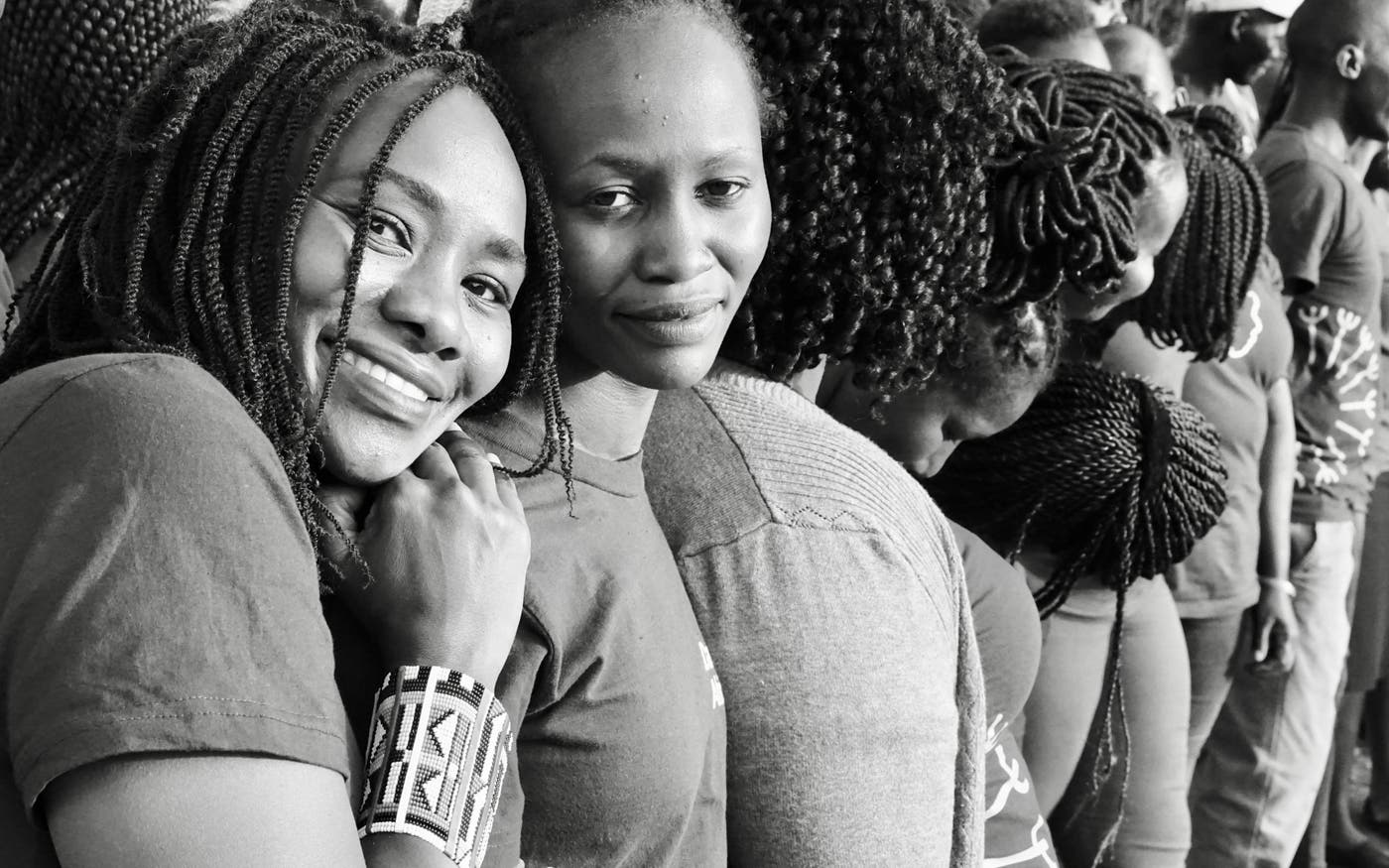
Wendo was so passionate about this mission that, in 2009, she quit her financially secure job at the bank and began helping the women full time. “I had no formal training for this, and I had absolutely no savings to do it, but I just had to do it,” she recalls. She recruited a group of mentors from the local nonprofit community and set up an organization, which she called Dandelion Africa—a tribute to the resilience of women thriving in difficult environments. Dandelion Africa is how Wendo grew around her grief.
The first two years of operations almost broke her. She had no grant money or other resources to pay herself or anyone else. “Ironically, I felt selfish doing what I was doing,” she says. “I knew I was helping these women, but our family was going through hell. My husband did his best to support us with his earnings as a farm manager, but we barely had enough to pay school fees for our children.”
Just when Wendo was about to give up, the Kenyan government gave Dandelion Africa its first grant—a total of $3,500. The grant allowed Dandelion to provide HIV testing and counseling to almost everyone in one community. Through this work, Wendo learned just how many people living with HIV had no medical or psychological support. She saw that she had to go upstream—that is, not just ensure that women could get ARVs but also help change the economic and social conditions that were leading to such high rates of transmission.
Even as she started to line up the resources to go upstream, Wendo faced significant obstacles because of her gender. Once, when she sat down with a local official as she was organizing a government-funded free health clinic for his community, he started to tell her that she would have to pay for the doctors’ and nurses’ gasoline, the staff lunches, and washing the uniforms. When she resisted, he stood up and said, “In my tribe, when a woman speaks like that to a man, we slap her.” Wendo replied: “In my tribe, when a man hits a woman, we kill him.” The official sat down and said, “Okay, let’s plan this clinic.”
Over the subsequent decade, Dandelion built an all-Kenyan staff and a network of more than 200 volunteers, providing comprehensive health, economic, and educational services across a large swath of rural Kenya. Today, Dandelion Africa provides one of the best examples I’ve seen of community-led problem solving.
She and her team built—partly with their own hands—the all-hours Dandelion Medical Centre. The facility, which opened three years ago, is now driving down maternal mortality, HIV transmission from mothers to their babies, and vaccine-preventable diseases in a region where families previously had little access to even the most basic care. “When I first started the organization, I was barely staying alive,” Wendo says. “To come full circle and open a medical center that ensures every woman in the region can get quality care, that was just overwhelming to me. I just wish my best friend could have been with us at the opening.”
Dandelion Africa is also taking primary care directly to families. Its nurses hop on motorbikes and travel to homes, where they provide immunization, HIV testing, and other services. Dandelion Africa has also helped thousands of women and girls access contraceptives and sanitary supplies for the first time.
Wendo’s organization has also launched efforts to empower women and girls. For example, it helps women access small loans for starting their own businesses. It helps women adopt profitable farming techniques. And Wendo’s 22-year-old son helped create a successful effort to engage men and boys as advocates for women and girls. “When I see men becoming champions fighting FGM and whole villages saying no to FGM because they see how it harms the whole community, I know we’re doing something right,” Wendo says.
Counterintuitively, Wendo often finds it even more difficult to change women’s perceptions than men’s. “Sometimes, the women simply can’t imagine what it would be like not to be beaten by their husbands,” she says. “But we’ve learned how to reach them. We share stories that help them envision a different path.”
While the name Dandelion Africa suggests that Wendo has aspirations to expand in other parts of the continent, that is not the case. “We are going to stay in the hardest parts of Kenya, where no one else wants to work,” she explains. To achieve greater scale, she is working to cultivate 50 more dandelion-type leaders around the country.
Although finding 50 others with Wendo’s drive will not be easy, I’m optimistic that this tough, resilient leader will succeed.


Eye opener
What my favorite chart leaves out
Every year, 2 million babies are stillborn. A simple retinal scanner can change that.
If you’re anything like me, you have a favorite chart. Mine has been the same for years. It plots under-five mortality year over year—a figure that has dropped by half since the turn of the century, from over 10 million deaths in 2000 to fewer than 5 million in 2023.
In my view, this data is the strongest evidence we have that progress is possible, even in tough times, and that the investments the world has made in vaccines, oral rehydration, bed nets, and better nutrition are working.
But there's a rule in global health statistics that complicates the story: To count as a death, someone must have first been born alive. It sounds simple and obvious. But in practice, it isn't. That's because every year, about 2 million pregnancies end in stillbirth, which is when a baby is lost at 28 weeks or later. That's late enough that the mother has been feeling the fetus move for months. Many parents have already picked out a name. Often, the loss occurs in the final stretch of a pregnancy, or during labor itself, when everyone was expecting a healthy birth.
These tragedies should be central to how we measure child survival. Instead, they've fallen through the cracks—not quite a maternal health issue, not quite a child mortality issue. The UN didn't publish its first full global estimate of stillbirths until 2020, and stillbirth research is still badly underfunded in both rich and poor countries.
What gets measured gets managed, as the saying goes—and what doesn't, well, doesn't.
The data reflects this disparity. Stillbirths have fallen just 34 percent since 2000, compared to 50 percent for under-five mortality over the same period. In 81 countries—mostly low- and middle-income—the stillbirth rate hasn't meaningfully improved at all in 25 years. For every one stillbirth in Europe, there are roughly 40 in sub-Saharan Africa.
What's frustrating is that we know what causes, and therefore how to prevent, most stillbirths. One of the biggest drivers is pre-eclampsia—a dangerous spike in blood pressure during pregnancy—which is responsible for half a million fetal deaths every year, along with 70,000 maternal deaths. Beyond that, the bulk of stillbirths stem from a cluster of conditions we understand well: maternal infections, obstetric complications during labor, and chronic conditions like untreated diabetes.
If we could catch these problems earlier, we'd have a much better chance of intervening before it's too late. But that's hard to do in the rural clinics where most pregnant women receive care, which often have unreliable electricity, no specialists, and little in the way of lab equipment. By the time pre-eclampsia is obvious, or gestational diabetes has gone unmanaged through the third trimester, the harm is often irreversible. Even emergency intervention may not help.
But a few months ago, I got to hold a device that has the potential to make a huge impact: the Remidio fundus camera. You hold it up to a patient's eye to get a high-resolution image of their retina in seconds, no dilation required. A community health worker with a few hours of training can use it. The device itself is about the size of a handheld video camera, battery-powered, and portable enough to carry from village to village.
Why the retina? It's the only place in the body where you can see blood vessels from the outside.
Remidio is a medtech startup out of India, and its camera was originally built to screen for diabetic eye disease. With an AI system running on a phone the camera plugs into, it can pick up early signs of the disease that would otherwise require blood draws and specialist follow-up to catch. It's already been used that way for more than 15 million patients in 40 countries.
But that same hardware, with different software, can also flag the conditions that drive so many dangerous pregnancies. Gestational diabetes sharply increases the risk of pre-eclampsia, preterm birth, and fetal death, and in most of rural sub-Saharan Africa or South Asia, it usually isn't screened for at all, because the standard test requires a lab. A retinal scan offers a different way in. Remidio’s device is currently being used in India to screen pregnant women for conditions that drive stillbirth. And researchers are now adapting the same hardware to screen for anemia and hypertension, too.
A tool like Remidio’s won’t solve the problem of stillbirths alone. We also need more skilled birth attendants, better emergency obstetric care, and stronger health systems. But small, portable, affordable diagnostics in the hands of community health workers are exactly the kind of lever that can start to move a number that hasn't moved in a long time. That's a big part of why the foundation committed $2.5 billion to women's health research and development last year, our largest investment in this area ever.
In 25 years, I hope my favorite chart in the world will have two lines on it: one tracking under-five mortality, and one tracking stillbirths. With the right commitment, I believe both will have fallen dramatically, and both could be approaching zero.
The last mile
We’re closer than ever to eradicating polio
...And closer than ever to seeing a resurgence.
When most Americans think of polio, we probably picture President Franklin Delano Roosevelt. In 1921, at age 39, he was paralyzed by the virus and never regained the use of his legs. His story helped turn polio into a national cause. But in many ways, his experience was an anomaly.
After all, polio is overwhelmingly a childhood disease, with the vast majority of cases affecting those younger than five. That was true when FDR fell ill, and it’s true today. The typical patient isn’t an adult with an already established political career—it’s a little kid, often a little kid in a low-income country, who might never get the chance to take his first steps.
That injustice is one big reason I've spent the past two decades working to eradicate polio. The other reason is that eradication is actually possible, realistic, and well within reach. This is a disease we can get rid of—not just control, but eliminate everywhere. That is a rarity in global health.
The world has already made extraordinary progress. Back in 1988, when Rotary International and the World Health Assembly set the goal of eradication, the virus was paralyzing more than 350,000 children each year across 125 countries. Since then, cases have dropped by 99.9 percent. The strains known as Type 2 and Type 3 wild poliovirus have been eradicated. The entire African continent is certified wild-polio free. Only two countries—Afghanistan and Pakistan—still have persistent transmission of Type 1 wild poliovirus.
Now we're closer than ever to total polio eradication. But the last mile is proving the hardest because viruses find ways to exploit any immunity gaps or weaknesses. Wherever vaccination rates slip—even briefly—they can resurface.
One of the biggest challenges comes from what are called variant outbreaks. In communities where immunization is low, the weakened virus used in the oral polio vaccine can circulate asymptomatically and rarely, over time, mutate enough to regain the ability to cause paralysis in unvaccinated children.
While most variant outbreaks happen in places with extremely low vaccination coverage, poor sanitation, and weaker health systems, no place is risk-free until the world is polio-free. In 2022, the United States confirmed its first paralytic polio case in nearly a decade, and the virus was detected in New York wastewater samples. In the time since, variant polioviruses have also been found in the U.K., Ukraine, Indonesia, and other countries.
The good news is that today’s tools are better than anything we had even five years ago, and they make every dollar spent on the cause go further than ever before. We have a new oral vaccine, nOPV2, that’s far less likely to mutate and lead to new variant outbreaks; nearly two billion doses have already been given worldwide. New regional labs in Ghana, Nigeria, South Africa, and Uganda that test wastewater samples and sequence viruses have cut detection times by over 30 percent, which gives health workers a critical head start on outbreak response. And the surveillance network for polio is one of the most sophisticated ever built—also helping alert public health officials to outbreaks of cholera, measles, Ebola, and even COVID-19 at the height of that pandemic.
The Gates Foundation has been proud to support these advances as part of the Global Polio Eradication Initiative, a coalition of the WHO, UNICEF, the CDC, Gavi, Rotary International, and dozens of countries’ governments. It’s one of the most successful collaborations in the history of global health.
But right now, GPEI is facing a $1.7 billion funding gap, with various long-term donor governments cutting back their support. Without the right resources, vaccination campaigns may have to be scaled back, surveillance sites will likely close, and the virus could spread globally.
In the century since FDR was paralyzed by the virus, American leadership and generosity have helped turn polio into a fight the whole world could win. From the March of Dimes, which funded research, to the development of the first vaccines, to support for eradication campaigns, U.S. commitment has been decisive.
The world is at the brink of ending this terrible disease, and the stakes of this moment couldn’t be higher. If we finish the job, we free up billions of dollars for other health priorities and—most importantly—protect generations of children from a virus that has paralyzed millions. If we back down from the fight, up to 200,000 children could be paralyzed each year within a decade.
We have the scientific tools and infrastructure needed to cross the finish line. And we have hundreds of thousands of committed vaccinators who are determined to get us there—who go door to door across deserts, jungles, floodplains, and war zones to make sure no child is missed. I've met them, I've heard their stories, and I've seen how determined they are to finish the job.
We should be too.
Power play
The next generation of electricity is almost here
I’m in Texas this week to talk about the remarkable breakthroughs fueling our zero-emission future.
Greetings from the Lone Star State! I’m in Texas this week for the Breakthrough Energy Ventures Investors Summit. This is one of the best places in the world to see the future of energy, and I can’t wait to see how much progress has been made since my last visit.
There’s a lot on the agenda this week, but I’m especially excited to talk about electricity breakthroughs. By 2050, the world will need nearly three times as much power as we use today—and if we’re going to decarbonize the economy, we’ll have to electrify a lot of things that currently use fossil fuels. That means we need to deliver a huge amount of energy in a clean, reliable, and affordable way.
If you’re an electricity nerd like me, this is an exciting moment. Earlier this month, TerraPower—the next-generation nuclear power company I created in 2008—received federal approval to start building the nuclear reactor at its Kemmerer, Wyoming plant. Wind and solar are reportedly generating more electricity than fossil fuels in the EU for the first time. We’re seeing a clear shift as the world’s electricity system is becoming more diverse, more innovative, and more dynamic than ever before.
Here are three of the coolest technologies people will be talking about this week:
Geothermal. Geothermal power has been around for more than a century, but new approaches are unlocking greater potential for the technology. Most geothermal power plants today are located near the boundary between two tectonic plates, where you don’t have to drill as deep to find usable heat that can be pumped to the surface to turn a turbine and generate electricity.
Fervo wants to make geothermal an option in more places by both digging deeper (up to a mind-blowing 15,000 ft below the surface) and extending their wells horizontally at their deepest point. The results so far are super promising: Their pilot project has been consistently generating electricity since 2023, and their Cape Station plant in Utah will come online this year.
Fusion. Fusion is the reaction that powers the sun and stars, and it has the potential to be a virtually unlimited source of clean, safe electricity. Once the technology is fully commercialized within the next decade, it can be built anywhere, scaled up, and used to make huge amounts of electricity with no carbon emissions and minimal waste.
The question right now is how we get there. It seems likely that the first commercial fusion plants will use magnetic fields to harness the reaction to generate electricity. There are two different approaches to this: the tokamak, a donut-shaped machine that is easier to build but harder to keep stable, and the stellarator, a twist-shaped machine that is harder to build but easier to keep stable. (An unstable reaction can damage the machine but poses no risk to safety.) Commonwealth Fusion Systems is on track to turn on their SPARC tokamak next year, and Type One Energy is making great progress with their Infinity One stellarator. Marathon Fusion, Xcimer, and Zap Energy aren’t quite as far along with their approaches, but I’m optimistic about what they’re doing.
Geologic hydrogen. Hydrogen shows great promise as an energy source, and the discovery of geologic hydrogen is one of the biggest energy surprises of the past decade. Although it’s the earliest stage technology on this list, I’m excited about its potential. Geologic hydrogen is a zero-emission power source that is continuously generated underground by the Earth itself. Bourakébougou, a village in Mali, is powered by the small hydrogen field it sits on top of, and researchers have found deposits in the U.S., France, and other places.
This is an unusual technology to talk about because it’s hard to predict a timeline. It could take decades before geologic hydrogen becomes commercially viable at scale—or a company like Koloma or Mantle8 could find a massive deposit tomorrow, and then we’re off to the races. Once we find one really good source, it’ll be much easier to find the second because we’ll know exactly what we’re looking for.
If I could hop in a time machine and see what the future looks like a few decades from now, I would expect to see at least one of these technologies generating a significant chunk of the world’s power. It’s amazing to see so much progress being made in so many different areas, because it means that we’ll have options for how we generate affordable, reliable, clean electricity at the scale the future demands.


