


A global health giant
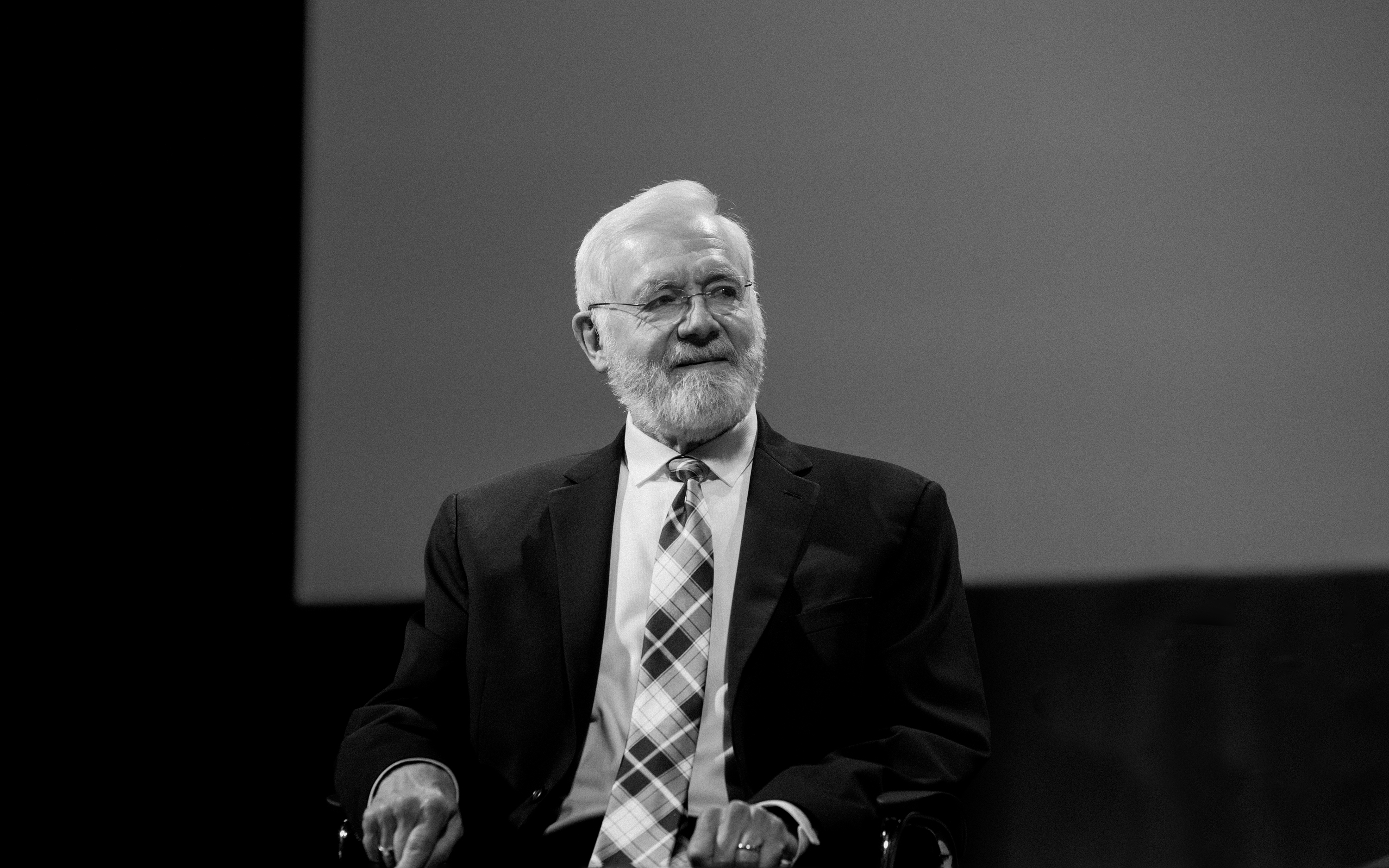
Dr. Bill Foege, a hero who saved hundreds of millions of lives
Celebrating the life of a mentor and friend.


I’m greatly saddened to learn of the passing of Dr. Bill Foege. Bill was a towering figure in global health—a man who saved the lives of literally hundreds of millions of people. He was also a friend and mentor who gave me a deep grounding in the history of global health and inspired me with his conviction that much more could be done to alleviate suffering.
I first met Bill in 1999. At the time, I was interested in global health but didn’t know much about it. Soon after, we asked Bill to join the Gates Foundation as a senior advisor. In doing so, we used the oldest trick in the leadership handbook: get people who know more than you do to join your team.
It was obvious right away that Bill was a special person—not just because he was so accomplished but also because of his compassion for humanity. In that way, he reminded me of my dad.
Bill loved to send me books to help me educate myself about global health. In fact, right after we met for the first time, Bill followed up by sending me a list of 82 books and articles.
One of those books was Out of My Life and Thought, the autobiography of the global health pioneer Albert Schweitzer. “Fortunate are those who succeed in giving themselves genuinely and completely,” Schweitzer wrote in 1933. “[But] anyone who proposes to do good must not expect people to roll any stones out of his way, and must calmly accept his lot even if they roll a few more into it. Only force that in the face of obstacles becomes stronger can win.” That passage perfectly describes Bill and his willingness to do whatever it took to help the world’s poorest people.
Bill read Schweitzer’s book as a teenager growing up in rural eastern Washington, and it helped inspire him to dedicate his life to global health. When Bill attended medical school, the field of global health was sorely neglected. “At my fiftieth medical school class reunion, a classmate confessed that when I told him I wanted to go into global health, he said to himself, What a waste,” Bill wrote in his book The Fears of the Rich, the Needs of the Poor. And then Bill helped invigorate that neglected field.
He was best known for the strategy and leadership that helped the world eradicate smallpox, one of the most important victories in the history of public health. That success brought an end to a horrific disease that killed 300 million people in the 20th century alone. It also gave the world the confidence to try to eradicate polio, Guinea worm, measles, malaria, and other diseases.
Bill sometimes put his own life at risk to do his work. While fighting smallpox outbreaks during the Nigerian civil war, he was arrested and held in prison twice— “not a sought-after experience,” he wrote with his usual understatement. “But interestingly, my concern at the moment was for the time being lost for planning Monday’s [vaccination efforts].”
I had long known about his accomplishments as director of the Centers for Disease Control, but reading The Fears of the Rich, the Needs of the Poor gave me a deep understanding of the constant political and policy battles he had to fight during these years. “Reason was [often] brushed aside,” he wrote. “The power of science is often neutralized by the power of power.” Bill showed tremendous patience and moral courage in fighting for what he believed in.
When I first met Bill, I was also blown away by what he had done to expand vaccination for the world’s poorest children. He was instrumental in launching the Task Force for Child Survival, which quadrupled the percentage of children around the world who receive basic vaccinations. He also used his positions at the task force and as director of the Carter Center to help deliver a miracle drug called Mectizan to tens of millions of people a year suffering from a debilitating disease called onchocerciasis. Very few other people could have brought together such a diverse coalition of partners—including African health ministers, nonprofits, churches, and a major pharmaceutical company. Bill told that story in an essay that he let me share on Gates Notes in 2014. It is an amazing piece of writing and gives you a sense of the kind of person he was.
I also want people to know how humble Bill was. One of my favorite examples comes from the final days of the push to eradicate smallpox, when he and his family decided to return to the U.S. from India. His boss at the time urged Bill to remain in India until he and his team could celebrate the world’s final case of smallpox. Bill told his boss, “If I remain in India, too much attention would be directed toward the external support that India received, and it is very important that recognition be given to the accomplishments of hundreds of thousands of Indians who really did the work.”
Late in life, Bill spoke openly about his own mortality. “I feel so enthusiastic every day about seeing the newest thing in science and health,” he told an interviewer. “The part that’s going to be hard about dying is not dying but not being able to see what’s happening next.” The legacy of Bill’s career is that many of the remarkable developments to come will have his imprint all over them.


