




A remarkable transformation
Memories from an inspiring trip to Rwanda
Rwanda's long-term investments in people, strong institutions, and delivery have translated into real progress.


I just got back from the most incredible week in Rwanda. My favorite trips are always the ones that leave me feeling inspired and energized. And if you’re looking for reasons for optimism, Rwanda is a good place to start.
What stood out to me was how Rwanda's long-term investments in people, strong institutions, and delivery have translated into real progress. Over the last 25 years, the country has delivered one of Africa’s most remarkable health transformations. Since the year 2000, the number of children who die before the age of five has dropped by 73 percent. Maternal deaths have fallen by over 80 percent, and nearly all pregnant women now give birth in a health facility with a skilled birth attendant present.
I was lucky to meet many of the local leaders and innovators driving that progress. Africa is entering a new era that is increasingly shaped by African leadership, and it’s amazing to see firsthand. At the Gates Foundation, our role is to listen to leaders like the ones I met, and to support them with resources, data, and technical expertise so they can get the greatest value from every dollar they invest in saving and improving lives.
These were some of the highlights from the week:
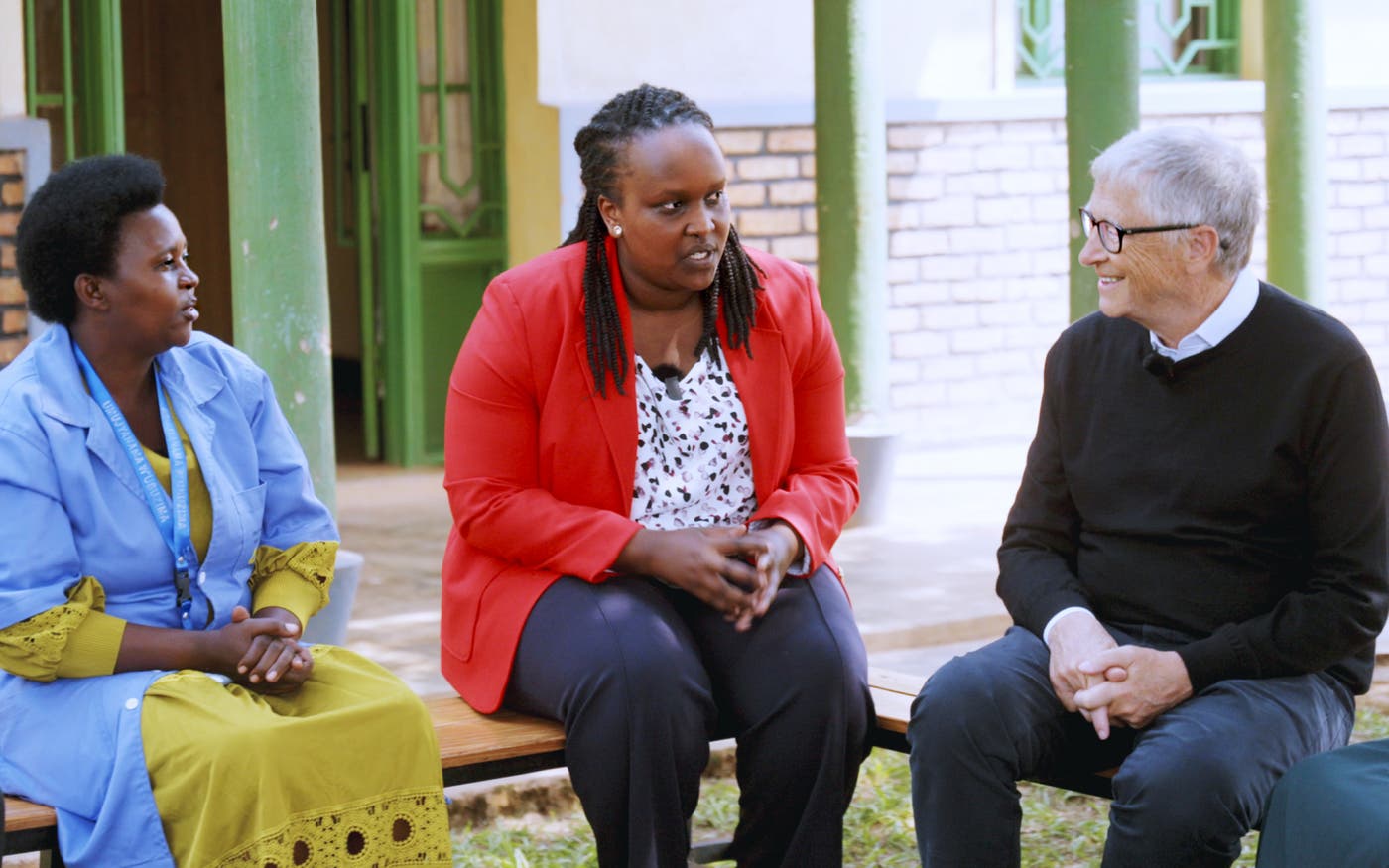
Rwanda’s frontline health heroes: My trip started in Mwulire, where Gaudence Ngendahayo, a community health worker, showed me what her work looks like as she made the rounds in her catchment. Rwanda’s community health worker program is the backbone of its health system, and when you watch Gaudence work, it’s easy to see why. She goes house to house checking in on how families are doing. If someone isn’t feeling well, she either treats them herself or refers them to the health center nearby. (Around 60 percent of all malaria cases in Rwanda are treated by community health workers.) Along the way, she collects invaluable information that helps connect communities to the broader health system.
Primary healthcare in the community: If Gaudence isn’t able to treat someone herself, their next stop is the Mwulire Health Center. I visited the facility, which is primarily staffed by nurses and offers all of the services you would expect from a primary care provider: outpatient consultations, prenatal and maternal care, normal deliveries, family planning, immunization, and HIV and TB services. (More complex cases are referred to district hospitals.) It was interesting to learn more about how the data collected here flows through the health system to Rwanda’s National Health Intelligence Center, or NHIC, connecting every level of care and helping health workers make quick and informed decisions.
Digging into the data: Next was seeing the NHIC firsthand, where real-time data from clinics, hospitals, and community health workers is used to generate insights that the Ministry of Health uses to make quick, evidence-based decisions. Rwanda has done an incredible job building digital public infrastructure, or DPI, and I got to learn more about how its investments have paid off over the last decade. Rwanda has created a culture where data and evidence matter. They track what they're doing, they see what needs to improve, and they take action. The NHIC is also where Horizon 1000, our partnership with OpenAI to improve quality care by accelerating the adoption of AI tools in primary health clinics, is housed. I wrote about the initiative earlier this year, and it was exciting to see it taking shape on the ground. Seeing real pilots underway rather than plans on paper was one of the best parts of the trip. I can’t wait until the day we can point to a patient who got better healthcare because of it.
Manufacturing key medical supplies: Most people don’t think about the supply chain when they picture healthcare systems, but it’s essential to ensuring health workers have the tools they need. The staff at Mwulire Health Center use auto-disable syringes—injectors that can only be used once, which prevents the spread of bloodborne pathogens like HIV—made nearby at the TKMD Rwanda Manufacturing Facility. Being able to make key supplies locally makes the system more resilient and reduces its dependence on imported products, while also benefiting neighboring countries that rely on these essential medical products.
Up close with Rwanda’s digital transformation: I’ve followed Rwanda’s work on DPI closely for many years, but there is nothing quite like seeing it in person at the Upanzi Digital Experience Center at Carnegie Mellon University Africa. The Upanzi Network was created to build Africa’s capacity to develop, test, adopt, and govern open-source digital technologies—like identity, payments and cybersecurity—in a way that is secure, inclusive, trustworthy, and locally relevant. I got to see their DPI stack up close, which is built on open-source platforms like MOSIP and Mojaloop and is now being adopted by a growing number of African governments to run their national critical infrastructure. It was super interesting to hear from the young researchers shaping it with their lived experiences across Africa. This is exactly the kind of African-owned, African-built infrastructure that will improve lives across the continent.
Young innovators leading the way with AI: I always love meeting with brilliant young innovators, so I knew visiting the Rwanda AI Scaling Hub in Kigali would be fascinating and inspiring. I met founders who are using technology and AI to tackle local development challenges, from expanding access to healthcare to helping communities access critical services. Dr. Loza Admassu, founder of Ambucycle, is using data-driven logistics to improve emergency medical transport and connect patients more quickly to life-saving care. Audace Niyonkuru, founder of Digital Umuganda, told me about the efforts she’s leading to collect and curate African local-language voice data to help train AI models that better understand and serve African communities. What stood out was not just the technology itself but the ambition, creativity, and determination of young Africans who are building solutions for their own communities and creating innovations with the potential to benefit people around the world.
The next generation of African health leadership: If I had to pick one highlight of my trip, it would be my day at the University of Global Health Equity in Butaro. My friend Paul Farmer was working at the university when he died, and it was moving to see how his vision of equity continues to shape the university, the hospital, and the community around it. Watching medical students train for the kinds of emergencies they will one day manage in their own communities was especially inspiring. I was honored to help launch the Butaro Dialogues and speak with students from across the continent, including members of the Consortium of Medical Students' Associations. Their questions reflected both a deep understanding of today's challenges and an ambitious vision for a more equitable future of global health. Africa’s greatest resource has always been its people. Sitting across from these young people as they talked about their big ideas for global health, it was crystal clear that they are the next generation of leaders who will shape the continent’s future.
Growing farms with data and AI: My last stop was the One Acre Fund, an African-focused organization that helps millions of smallholder farmers get more out of every harvest. I met farmers who work with the program and leverage on-time delivery of seeds and fertilizer, along with hands-on training, to help their families grow more food and earn more money. (Rwandan farmers in the program generated $118 million in new profits last year alone.) One Acre Fund connects farmers with technology by building on Rwanda’s digital farmer registry and subsidy system, connecting government data with on-the-ground support. They then pull in AI-powered tools like Virtual Agronomist, which can answer farmers’ questions over WhatsApp using real data on their soil and local weather. I’m super excited to see how innovations like this can arm more farmers across Africa with the information they need.
My time in Rwanda reminded me how much progress can be made when innovation reaches the people who need it most. Across the country, scientists, entrepreneurs, and governments are driving breakthroughs that are practical, affordable, and designed for local needs. Rwanda has already achieved major progress with even greater opportunities ahead, and its young people are poised to shape not only the African continent, but the world.


